Rental Income in North Oakville: Condo, Townhome or Detached?
Which property rents best in North Oakville? Compare condos, townhomes and detached homes: income, costs, landlord rules and a simple cash flow example.
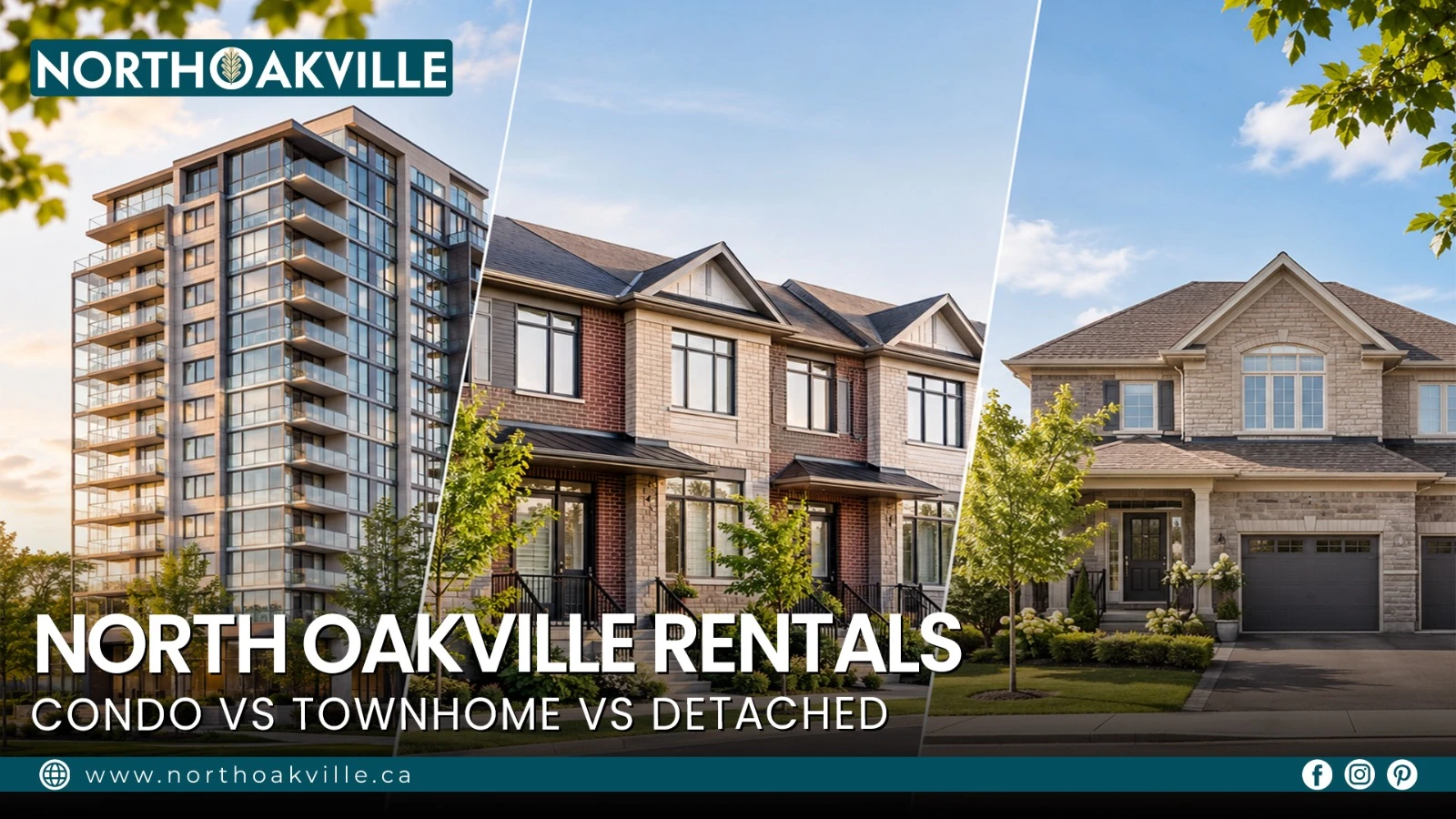
If you are thinking about buying a home in North Oakville to rent out, one of the first questions is what kind of property to buy. A condo, a townhome and a detached house can all be rented, but they bring in different amounts of rent, cost different amounts to carry and ask different things of you as a landlord.
This guide compares the three in plain language. It looks at who rents each type, what each one costs to hold, what the landlord ends up paying and doing, and how the numbers can look with a simple example. Prices, rents, fees and interest rates change, so the figures here are examples to help you think, not quotes. Check current listings and speak with a lender, lawyer and accountant before you buy.
What "Rental Income" and "Rental Yield" Mean
Rental income is the rent a tenant pays you. If your tenant pays $2,500 a month, your rental income is $30,000 a year, before any costs.
Rental yield is that same yearly rent expressed as a percentage of the property's purchase price. Investors use it to compare properties. If a home costs $600,000 and brings in $30,000 a year in rent, the gross yield is 5%. Net yield takes off costs such as property tax, insurance, condo fees and a repair allowance before it makes the comparison.
Most people do not think in yield. They think in terms of how much rent they can get, what it costs to hold, and how much work it is. This guide follows that approach.
The Three Types Compared
The table below compares the three property types in general terms, without relying on figures that go out of date.
Feature | Condo apartment | Townhome | Detached home |
|---|---|---|---|
Entry price | Lowest | Middle | Highest |
Monthly rent | Lowest in total, highest per square foot | Middle | Highest in total |
Typical tenants | Professionals, healthcare staff, students, couples | Families, couples, newcomers, downsizers | Larger families and professionals needing space |
Monthly fees | Condo fee | POTL or condo fee, or none if freehold | None |
Landlord workload | Lowest | Medium | Highest |
Tenant turnover | Often shorter stays | Often longer stays | Often longest stays |
Long-term growth | Tends to be more modest | Middle | Tends to be driven by land value |
A shorter side-by-side of detached house vs condo in North Oakville covers the two ends of this range, and the sections below add townhomes and the day-to-day costs and rules.
Condo Apartments
A condo is usually the lowest-cost way to enter the rental market, and it asks the least of you as a landlord.
Why Landlords Choose Them
Condos have the lowest entry price, so the down payment is smaller and the property is easier to qualify for. The condo corporation looks after the roof, exterior, landscaping and snow clearing, which leaves you with the inside of the unit and your tenant. Many are in newer buildings near transit, shopping and the hospital, which suits working professionals. Browsing current condos for sale shows how much the choice varies by building.
What to Watch
Condo fees come out of your rent every month and tend to rise over time. A special assessment can add a surprise bill. Tenants in apartments often stay for shorter periods, so you may pay for vacancy and re-leasing more often. Buildings differ a great deal in fees, rules and reserve funds, so choosing the building matters as much as choosing the unit. If you are comparing buildings, the best condo buildings for investors in North Oakville goes into that in more detail.
Townhomes
Townhomes sit in the middle of the range, with more space than an apartment and less cost and upkeep than a detached house.
Why Landlords Choose Them
Townhomes sit between an apartment and a house. They offer more space, often a garage and a small yard, and they appeal to families and couples who want to rent in a good school area but are not ready to buy. Freehold townhomes have no condo fee. Many newer townhomes are on a parcel of tied land, which means you pay a modest monthly fee for shared items like private roads and snow removal. You can compare current condo townhouses for sale and freehold options to see how the fees differ. Families often stay for several years, which keeps income steady.
What to Watch
The down payment is higher than for a condo. A freehold townhome means you pay for the roof, the exterior and major repairs yourself, so a repair reserve is important. Be clear about who handles snow and grass, and check for rented equipment such as a water heater or ventilation system, which is common in newer homes.
Detached Homes
A detached home asks for the biggest budget and the most upkeep, and it is the type most closely tied to long-term growth.
Why Landlords Choose Them
Detached homes bring in the highest total rent and tend to attract long-term tenants such as larger families and professionals who want space and privacy. Over the long run, the land under a detached home is a major driver of value. A detached home with a legal basement suite can also bring in a second rent, which is one of the few ways to improve the monthly numbers on a single property. The legal basement suite rules and permits are worth reading before you plan around that income. Current houses for sale show what is available in each area.
What to Watch
The price and down payment are the highest, and the gap between rent and carrying cost is usually the widest. You are responsible for the whole building and the yard, so repairs can be large. The pool of tenants who can afford the rent is smaller, so a vacancy can take longer to fill.
Who Pays for What
Costs are split differently depending on the type of property. This table shows the usual pattern, but your lease and building rules decide, so write them down.
Cost | Condo apartment | Condo or POTL townhome | Freehold townhome or detached |
|---|---|---|---|
Condo or POTL fee | Landlord | Landlord | Not applicable |
Property tax | Landlord | Landlord | Landlord |
Landlord insurance | Landlord | Landlord | Landlord |
Hydro, gas, water | Usually tenant, sometimes partly in the fee | Usually tenant | Usually tenant |
Rented equipment | Sometimes tenant by lease | Sometimes tenant by lease | Sometimes tenant by lease |
Roof, exterior, structure | Condo corporation | Corporation and landlord | Landlord |
Snow and grass | Condo corporation | Mostly the corporation | Landlord, unless arranged otherwise |
Two points often catch new landlords. First, a lease clause that tells the tenant to shovel snow or cut the grass may not shift responsibility away from you, so many landlords arrange this service themselves or set up a separate written arrangement after legal advice. Second, if your home has rented equipment from the builder, the contract is usually in your name, so decide in the lease how it will be charged.
A Simple Example With Round Numbers
This example uses assumed numbers, not quotes. It assumes a 20% down payment and a 5% mortgage over 25 years, with rents and costs that are typical enough to be useful. Your own numbers will be different.
Item | Condo | Townhome | Detached |
|---|---|---|---|
Price | $600,000 | $1,000,000 | $1,500,000 |
Monthly rent | $2,350 | $3,600 | $5,000 |
Mortgage payment | $2,792 | $4,653 | $6,980 |
Condo fee | $450 | $0 | $0 |
Property tax | $200 | $320 | $500 |
Insurance | $50 | $100 | $150 |
Repair reserve | $0 | $150 | $250 |
Gross yield | 4.7% | 4.3% | 4.0% |
Net yield | 3.3% | 3.6% | 3.3% |
Monthly result | About -$1,140 | About -$1,620 | About -$2,880 |
A few lessons come out of this table.
With 20% down, all three show a monthly shortfall in this example. That is common in this market, so it is worth planning for before you buy.
The condo has the highest gross yield, but its fees pull the net yield down. The townhome has no condo fee, which helps its net result.
A detached home brings in the highest rent, but the size of the loan means the monthly gap is largest.
Part of every mortgage payment reduces what you owe. In the condo example, roughly 30% of the payment goes toward principal early on, so the shortfall is not all lost money.
Things that improve the result include a larger down payment, a lower purchase price, a lower interest rate, and a legal basement suite that brings in a second rent. Things that hurt it include rising fees, vacancy, repairs and a higher rate at renewal. A mortgage pre-approval will show how a lender looks at an investment purchase, including how much of the rent it will count.
Demand, Vacancy and Tenants
North Oakville draws tenants who want a newer home in a good area with easy access to highways, GO connections, parks and schools. Demand tends to look like this:
Condos. Steady demand from singles, couples, healthcare workers and students, and usually quick to lease when priced fairly.
Townhomes. Strong demand from families and couples who want more space, often with longer stays once children are in local schools.
Detached homes. Demand from larger families and professionals, with fewer applicants at a higher rent, so it may take longer to find the right tenant.
Leasing tends to be busier in late spring and summer, especially for family homes tied to the school year, and slower in the winter. Turnover is a real cost, so a tenant who stays for several years is worth more than a slightly higher rent. Local areas matter too. The Uptown Core suits condo and stacked townhome rentals, while many newer family homes are listed under Rural Oakville.
Landlord Rules to Know
Once you have a tenant, the Residential Tenancies Act applies. It also helps to know what tenants expect when renting in North Oakville. The essentials:
Lease. Use the Ontario standard lease. Extra terms that conflict with the Act do not count.
Deposits. You can collect last month's rent. You cannot take a damage deposit.
Pets. A lease clause banning pets is generally not enforceable in Ontario, although condo rules can still limit pets.
Repairs and entry. You must keep the home in good repair and give 24 hours of written notice before entering, except in an emergency.
Rent increases. Many newer homes were first occupied after November 15, 2018 and are generally exempt from the annual rent increase guideline. For those units, rent can go up once every 12 months with at least 90 days of written notice, using the Landlord and Tenant Board's form for exempt units (Form N2). Older units follow the guideline instead.
Condo and POTL rules. Check the leasing rules, any registration or move-in fees, and limits on short-term rentals before you buy.
Disputes. A hearing at the Landlord and Tenant Board can take months, so careful tenant screening is your best protection.
Short-term rentals deserve extra care. Condo declarations commonly restrict them, and the Town has its own rules, so check both before planning on anything other than a long-term tenant.
Taxes, Financing and Insurance in Brief
These are general points and not tax advice.
Income tax. Rent is generally taxable, after deductions for eligible costs such as mortgage interest, property tax, insurance, condo fees and management. Claiming depreciation on the building can create tax later, so ask an accountant first.
Converting your own home to a rental. This has its own tax rules, so get advice before you move out.
Down payment and lenders. Rental properties generally need at least 20% down, and lenders usually count only part of the expected rent toward your income.
New builds and HST. An investor may need to pay an amount equal to the owner-occupant rebate to the builder on closing, then claim a rental rebate later. Plan for that cash and confirm the details with an accountant.
Land transfer tax. Land transfer tax applies to investors, and the first-time buyer rebate is meant for buyers who move in, so it does not apply to a unit bought purely to rent.
Insurance. A standard homeowner policy does not cover a rented home. Landlord coverage is different from regular home insurance, so ask your broker about liability and loss of rent.
Legal help. A real estate lawyer can review the agreement, the status certificate and any builder terms.
Which Type Suits Which Landlord?
The right type usually comes down to how much money, time and risk you are comfortable with. This table matches each kind of landlord with a sensible starting point.
If you are | A good starting point | Why |
|---|---|---|
A first-time landlord | A freehold or POTL townhome | A middle level of cost and work, with stable tenants |
A hands-off investor | A condo in a well-run building | The corporation handles the exterior |
Looking for long tenancies | A family townhome or semi | Families tend to stay |
Wanting the best chance at cash flow | A detached home with a legal suite | Two rents from one property, but with more cost and work |
Whichever you choose, the wider picture on rental demand and appreciation in the area is worth reading. A professional property manager can take much of the work off your plate. Fees are often a monthly percentage of the rent plus a fee to find a tenant, so include that cost if you plan to use one.
Questions to Ask Before You Buy
When was the home first occupied, and is the rent increase guideline relevant?
What are the condo or POTL fees, and what do they cover?
Are there rented equipment contracts, and who pays them?
What do the condo rules say about leasing, pets and short-term rentals?
How much rent do similar homes for rent in the same area actually ask for?
Can you carry the monthly shortfall if the home sits empty for a few months?
What happens to your payment when the mortgage term renews?
If it is a new build, how much cash will you need on closing for HST and other adjustments?
Common Mistakes
Looking only at rent and forgetting condo fees, tax, insurance and repairs
Skipping a cash reserve for vacancy and repairs
Using lease clauses that the law does not allow
Rushing to fill a vacancy without screening the tenant
Ignoring the building's reserve fund and rules before buying a condo
Not planning for the mortgage renewal
Assuming a legal suite is legal without checking permits
How North Oakville Compares
North Oakville tends to attract a steady pool of tenants because of its newer homes, schools and connections. Rents and prices differ in nearby towns, and the tradeoffs are worth understanding. Comparing North Oakville with Milton and Burlington or with Mississauga shows how price, lifestyle and commute differ across the region.
Final Thoughts
There is no single best property type for renting out a home in North Oakville. A condo suits a landlord who wants a lower price and less work, a townhome suits someone who wants a balance of space, stability and cost, and a detached home suits someone with a larger budget and a long horizon. Most single-unit purchases with 20% down will carry some monthly shortfall, so the decision is as much about your capital, your patience and your plan as it is about the rent.
A few reminders as you decide:
Work out your numbers with realistic rent, a repair reserve and a vacancy cushion.
Choose the building, area and tenant type before you choose the price.
Put utilities, equipment rentals and snow and grass care in writing.
Keep a cash reserve for the months you will not expect.
Get advice from a lender, a lawyer and an accountant before you commit.
If you are thinking about buying to rent in North Oakville, we are happy to talk through the property types, the areas and the questions to ask before you decide.
This article is for general information only and is not legal, tax or financial advice. Please confirm current details before you decide.
FAQs
How Much Rent Can I Get in North Oakville?
It depends on the type, size and area. Condos rent for less in total, and detached homes for the most. Check current listings for similar homes.
Which Property Type Is Best to Rent Out in North Oakville?
It depends on your budget and goals. Condos need less money and work, townhomes balance both, and detached homes suit long-term investors.
What Is Rental Yield?
It is a year's rent shown as a percentage of the purchase price. Net yield is the same measure after costs.
Can I Get Positive Cash Flow in North Oakville?
It is hard with 20% down on a single unit. A larger down payment, lower price or legal basement suite can help.
Does Rent Control Apply to New Homes in North Oakville?
Units first occupied after November 15, 2018 are generally exempt from the annual guideline, but notice rules still apply.
What Notice Do I Need to Raise Rent?
At least 90 days of written notice, and no more than one increase every 12 months. Exempt units use Form N2.
How Much Down Payment Do I Need for a Rental Property?
Generally at least 20%. Lenders usually count only part of the expected rent toward your income.
Who Clears Snow and Cuts Grass on a Rental?
For condos, the corporation does. For freehold homes, the landlord is usually responsible unless a proper arrangement exists.
Can I Ban Pets in My Lease?
Generally not in Ontario, though condo rules can still limit pets. Ask a lawyer about your building.
Do I Pay HST When Buying a New Home to Rent?
You may need to pay an amount equal to the owner-occupant rebate on closing, then claim a rental rebate later. Confirm with an accountant.
Can I Use My Condo as an Airbnb?
Often not. Condo rules commonly restrict short-term rentals, and the Town has its own regulations.
Do I Qualify for the First-Time Buyer Land Transfer Tax Rebate on a Rental?
Generally not. The rebate is for first-time buyers who move into the home.