Living in North Oakville: What to Expect Along Dundas Street
Moving to North Oakville? See what to expect along Dundas Street: neighbourhoods, housing, transit, schools, daily costs and pros and cons.
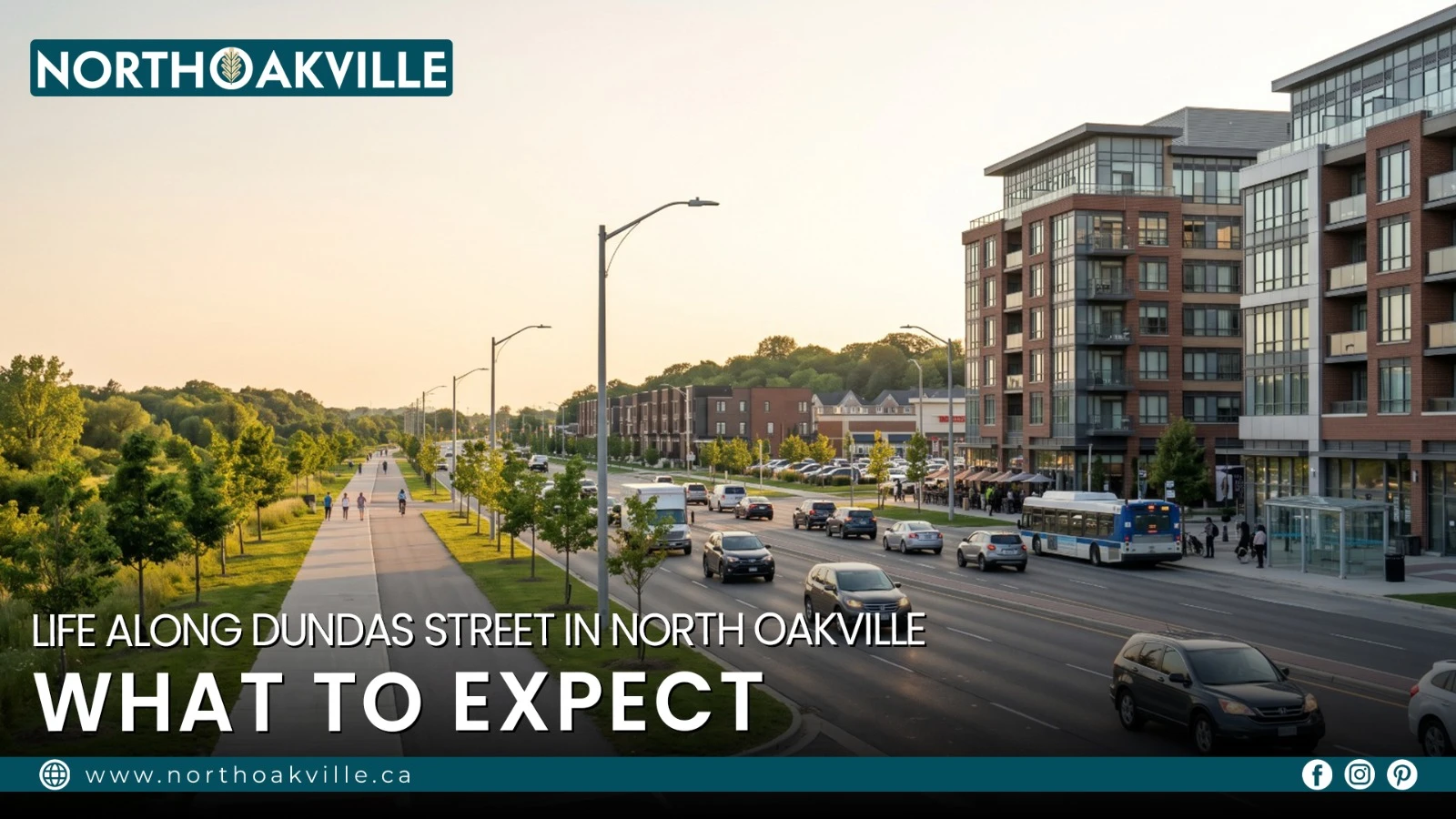
Dundas Street is the main street of North Oakville. It is where the area shops, commutes, eats and meets, and it is the dividing line between Oakville's older southern neighbourhoods and the newer master-planned communities to the north. People who move here usually want modern homes, easy highway and transit access, and everyday convenience, and they accept busier streets and smaller lots in return.
This guide describes what daily life along Dundas Street is actually like: where the corridor starts and ends, how each pocket feels, what housing and costs look like, how getting around works, and the trade-offs worth knowing before you sign anything. Prices, store openings, transit routes and construction schedules change often, so the guide describes patterns rather than exact figures. Check the current details for any specific street before you decide.
What is the Dundas Street corridor?
North Oakville generally means the part of Oakville north of Dundas Street, reaching up toward Highway 407. Dundas Street itself runs across this area as a busy arterial road lined with shopping plazas, mid-rise buildings and newer subdivisions, and it is planned as a long-term transit corridor. The communities behind it were laid out from scratch, with trails, parks and protected natural areas built into the design.
Compared with South Oakville, which has mature trees, deeper lots and the lakefront, North Oakville feels newer, denser and more convenient. Homes are built to current standards, streets follow a more regular pattern, and daily errands rarely mean a long drive.
How the area feels today
A decade or two ago, much of this land was farm fields. Today it is a mix of finished neighbourhoods and areas that are still being built, so the experience depends on where you land. Some streets feel settled, with mature landscaping, schools and playgrounds. Others are still growing, with new construction nearby and amenities arriving in stages.
Directly on Dundas Street, expect traffic, buses and some noise. A block or two back, in the residential loops, the pace drops quickly. Many residents say the best part of the area is that busy and quiet sit so close together.
The neighbourhoods along Dundas Street
Each pocket along the corridor has its own character. The table gives a quick comparison, and the notes below explain more.
Area | General feel | Typical housing | Often suits |
|---|---|---|---|
Uptown Core | Busy, walkable, urban | Condos and stacked townhomes (e.g., Minto's Oakvillage community) | First-time buyers, commuters, investors |
The Preserve and Glenorchy | Organized, family-oriented | Townhomes, semis and detached homes | Families |
Neyagawa and Sixth Line areas | Mixed, still growing | New communities and infill projects | Buyers who want newer builds |
West end near the hospital and Bronte Road | Practical, mixed housing | Condos, townhomes and detached homes | Healthcare workers, commuters |
Uptown Core
The Uptown Core is the busiest and most urban part of the corridor, with the highest density, the most retail and the main transit connections. It is one of the few places in North Oakville where life with one car, or none, is realistic. The trade-off is less space and more activity.
The Preserve and Glenorchy
These master-planned communities are known for newer homes, parks, trails and stormwater ponds, with schools and playgrounds close to the houses. Lots are compact, so yards are modest, but interiors tend to be modern and open. Daily life is quiet and focused on families.
Neyagawa and Sixth Line
Parts of this area sit closer to creek valleys and protected green space. Some blocks are established, and others are still filling in with new plazas and residential projects, so it helps to look at what is planned nearby before you buy. Many newer homes north of Dundas are listed under Rural Oakville, which is a helpful search term when you browse listings.
The west end
Near the hospital and Bronte Road, the corridor connects quickly to Highway 407 and to the neighbouring communities to the west. It is practical and convenient, with healthcare, services and a mix of housing styles.
Housing along the corridor
The housing mix is one of the reasons the area appeals to so many different people.
Types of homes
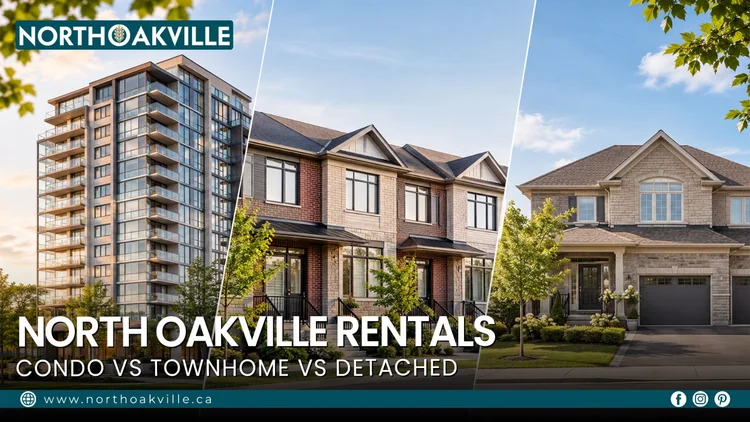
Condo apartments. Mostly in mid-rise and high-rise buildings near the busiest intersections. Monthly condo fees apply, and current condos for sale are easy to browse.
Stacked and condo townhomes. A step up in space from an apartment, often with lower upkeep than a house. You can see what is available among the condo townhouses for sale.
Freehold townhomes. You own the home and land. Some come with a fee for shared roads, parking or snow removal.
Semi-detached and detached homes. Mainly in the residential subdivisions behind the main road, with smaller lots than you find in older parts of town. Current houses for sale show what is on the market.
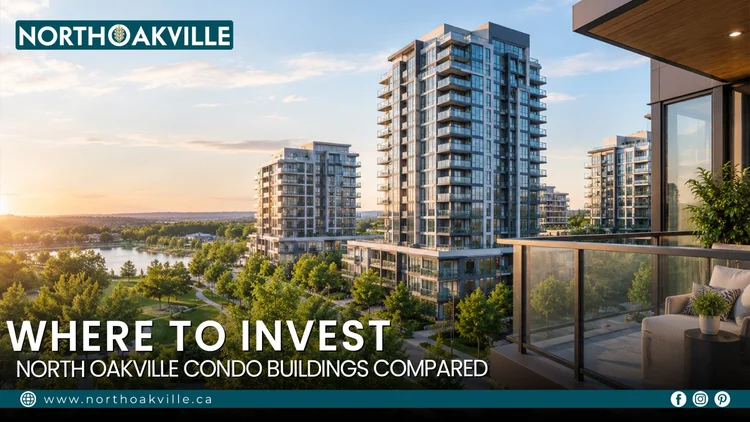
Prices follow the housing type: apartments and stacked units are the more accessible entry points, and detached homes sit at the top of the market. Because prices and rents move over time, compare current listings for the type of home you want. Buyers weighing a condo as an investment can also compare the best condo buildings for investors in North Oakville, and anyone interested in newly built homes can start with new homes in North Oakville.
What to know about newer communities
A few features of newer communities surprise first-time buyers:
POTL fees. Many newer townhomes are on a parcel of tied land, which means you own your home but pay a monthly fee to a condominium corporation for shared items like private roads, visitor parking and snow removal. Have your lawyer review the status certificate and the reserve fund.
Equipment rentals. Some new homes include rented equipment such as a water heater or ventilation unit, with a monthly charge that is separate from your utilities. Ask what is rented and what it costs.
Interim occupancy and closing dates. New condos and stacked homes often involve a period of occupancy before the building registers, with monthly fees to the builder. Buying pre-construction comes with timelines and costs that are worth understanding up front.
Development charges and adjustments. Check whether they are capped in your contract.
Getting around
Transportation is a major reason people choose this area.
Highways and transit
Highways. Highway 407 sits just north of the corridor, and the QEW and Highway 403 are a short drive south. Note that the 407 is a toll road, so frequent use can add to a monthly budget.
GO Transit. Buses from the Uptown Core and along Dundas connect to the Oakville GO Station, where trains run toward Toronto. GO buses also link North Oakville to other parts of the region.
Local buses. Oakville Transit serves Dundas Street and the main roads that feed into it. Service is best along the main roads and thinner in the interior neighbourhoods.
Future transit. Dundas Street is planned as a long-term rapid transit corridor. Timing and design can change, so check the Town and Halton Region for current plans if transit matters to your decision.
Traffic, walking and cycling
Traffic. Dundas Street and Trafalgar Road carry the area's heaviest traffic, with slower travel at the morning and afternoon peaks and around school drop-off times.
Walking and cycling. Sidewalks, multi-use paths and trails run through many neighbourhoods and along creek valleys, so you can often walk or cycle away from the busy roads.
Most households here still own at least one car. Condos and homes near the Uptown Core are the exceptions where life without one is easier.
Shopping, dining and services
Dundas Street is the area's retail spine. The stores along it include large grocery stores, big-box plazas such as SmartCentres Oakville, pharmacies, banks, clinics, fitness centres and a growing number of independent restaurants and cafes. For most everyday errands, you rarely need to leave North Oakville, and residents also have a growing choice of gyms and fitness centres close to home.
The character is different from downtown Oakville. Shopping is plaza-style and car-friendly, with plenty of free parking, rather than a walkable main street with boutique shops. Closer to the Uptown Core, you can do much of this on foot. Further back in the residential pockets, most people drive or cycle to the main road.
Schools, healthcare, parks and community
Schools
The schools in North Oakville are served by the public and Catholic English boards, and by French-language boards. Because the area has grown quickly, new neighbourhoods are sometimes assigned to a school outside the immediate area until a local school is built, and school boundaries and enrolment limits can change. If schools matter to you, confirm the school for a specific address with the school board before making an offer.
Healthcare
The hospital on Dundas Street West anchors healthcare in the area, with clinics, medical offices and specialists located nearby and along the corridor.
Parks and recreation
The Sixteen Mile Sports Complex is the area's main recreation hub, with arenas, a community centre with aquatics facilities and a branch of the Oakville Public Library. Smaller neighbourhood parks, splash pads, playgrounds and trail networks are spread throughout the communities.
Nature and green space
A significant amount of green space north of Dundas has been protected, including creek valleys and woodlots. It means you can often step from a residential street onto a trail within minutes.
Community
The area draws a diverse mix of residents, including young families, professionals, newcomers to Canada and downsizers, with places of worship, cultural groups and community programs close by. Because many people moved in within the same few years, it is often easy to meet neighbours and build local connections.
Daily costs to plan for
Rather than quoting figures that will change, here is what a typical North Oakville household should budget for:
Cost | What to know |
|---|---|
Mortgage or rent | The largest item, and it varies by housing type |
Property tax | A yearly bill for owners, based on assessed value |
Condo or POTL fees | Monthly for condos, stacked units and many townhomes |
Utilities | Newer homes are generally efficient, and some condos meter hydro and water separately |
Equipment rentals | Possible for water heaters, furnaces or ventilation systems |
Insurance | Home, condo or tenant coverage, plus landlord coverage if you rent it out |
Transportation | Car costs, GO fares, parking and any 407 tolls |
Childcare and activities | Daycare and childcare is often a large item for families |
If you are buying, the cost of closing also matters. Oakville has no separate municipal land transfer tax, only Ontario's, and you can read more about how land transfer tax works for buyers here. A mortgage pre-approval will show you what you can afford before you start viewing homes. To see what homes have actually sold for, browse sold homes in Uptown Core and sold homes in Rural Oakville.
On Dundas Street or a block back?
Where exactly you live along the corridor makes a bigger difference than most people expect. Living on Dundas gives you convenience and activity, while a few streets back gives you quiet and more space.
Feature | Directly on or near Dundas | A few streets back |
|---|---|---|
Noise | Traffic, buses and some construction | Mostly local traffic |
Walkability | Shops and services close by | Parks and trails close by, shops a short drive |
Housing | Condos and stacked townhomes | Townhomes, semis and detached homes |
Privacy | More street activity | More space and quieter streets |
Pros and cons
Living here comes down to this: you gain convenience, connections and newer homes, and you give up some space, quiet and lakefront charm.
Advantages | Drawbacks |
|---|---|
Shopping, services and healthcare close by | Heavier traffic at peak times |
Quick access to highways and GO connections | Noise and dust near active construction |
Newer homes with modern layouts | Smaller lots and less backyard space |
Parks, trails and recreation nearby | Farther from the lakefront |
Diverse, family-friendly neighbourhoods | Plaza-style shopping rather than a historic main street |
Strong long-term planning and infrastructure | Higher home prices than some nearby towns |
The area suits commuters, families who want newer homes and recreation close by, first-time buyers looking for condos or townhomes, and downsizers who want less upkeep without leaving Oakville. It is a weaker fit for people who want large mature lots, older character homes or a walkable village feel.
Growth, construction and what comes next
North Oakville is guided by long-term secondary plans, and building continues in phases. In practice, that means:
Some blocks near you may still be under construction, with noise, dust and temporary lane or sidewalk closures.
Vacant land near your home may be built on eventually, so a view today is not a guarantee.
New shops, schools, parks and community facilities tend to arrive in stages as the population grows.
Transit and road improvements may change traffic patterns over time.
Before you commit to a specific home, check the Town of Oakville's development application map and Halton Region's project pages for what is planned within walking distance. It is one of the most useful things a buyer or renter can do.
Moving here: buying or renting
If you are buying
Look at current new listings to see what is on the market.
Ask whether the home is freehold, condo or POTL, and what the monthly fees cover.
Have a real estate lawyer review the agreement, status certificate and any builder terms.
Check school boundaries, noise, traffic and nearby planned development for the exact address.
If buying new, review closing dates, deposits, development charges and warranty coverage.
If you are renting
Many newer units are exempt from Ontario's rent increase guideline (rent control cap). Units first occupied after November 15, 2018 are generally exempt, so rent can be raised to market level, but only once every 12 months and with at least 90 days of written notice. Ask about lease length and consider a longer term for stability.
Confirm whether utilities are included or billed separately.
Compare current homes for rent in Uptown Core and homes for rent in Rural Oakville to see what is available.
Learn what to expect before you sign by reading about renting in North Oakville.
Once you have moved in, many owners and tenants start with home security as an easy first project for settling into a new home.
How North Oakville compares
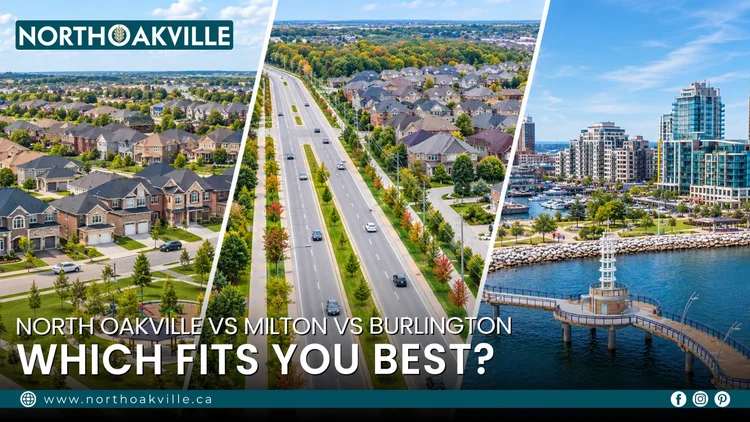
Compared with South Oakville, North Oakville is newer, more affordable at the entry level and more convenient for errands, while South Oakville offers mature neighbourhoods, large lots and the waterfront. Next to Mississauga, it feels calmer and greener, with a more suburban pace, and a closer look at North Oakville versus Mississauga covers the trade-offs in more detail. Compared with other towns in the region, you can see how Milton and Burlington differ on price, commute and lifestyle. The right fit depends on your budget, commute, family needs and how much you value space, walkability and nature.
Final Thoughts
Living along Dundas Street means choosing convenience, modern homes and good connections, along with a bit more traffic and a pace that is still evolving. The area works well for people who value having shops, healthcare, trails and highways close by, and who are comfortable living in a community that continues to grow.
A few reminders as you decide:
Visit at different times of day to see traffic, noise and activity for yourself.
Compare a home directly on Dundas with one a few streets back.
Check school boundaries, fees and planned development for the exact address.
Plan your budget around the full cost of living, not only the mortgage or rent.
Get legal and lender advice before you commit to a purchase.
If you are thinking about a move to North Oakville, we are happy to talk through the neighbourhoods, the housing options and the questions worth asking before you decide.
This article is for general information only and is not legal, tax or financial advice. Please confirm current details before you decide.
FAQs
Is North Oakville a good place to live?
Yes, North Oakville is an excellent place to live, especially for young families and commuters prioritizing modern infrastructure.
Where is the Dundas Street corridor in North Oakville?
It is the stretch of Dundas Street across the north of Oakville, with communities north of it reaching toward Highway 407.
What are the main neighbourhoods along Dundas Street?
Common areas include the Uptown Core, The Preserve, Glenorchy, the Neyagawa and Sixth Line areas, and the west end near the hospital.
What types of homes are available?
Condo apartments, stacked and condo townhomes, freehold townhomes, semis and detached homes.
What is a POTL fee?
It is a monthly fee for shared items like private roads, visitor parking and snow removal, paid by owners of homes on a parcel of tied land.
How is the commute from North Oakville?
Highway 407 and the QEW are close, and buses link to the Oakville GO Station. Peak traffic can be slow on Dundas Street and Trafalgar Road.
Do I need a car in North Oakville?
Most households have one. Living near the Uptown Core makes a car-light lifestyle easier.
How do school boundaries work here?
Boundaries are set by the school boards, and some new areas use temporary assignments. Confirm the school for your exact address.
Are newer rentals subject to rent control?
Units first occupied after November 15, 2018 are generally exempt from the annual guideline, though notice rules still apply.
What is the difference between living on Dundas and a few streets back?
On Dundas you get convenience and more activity. A few streets back is quieter, with more space and easy access to parks.
Will there be more construction near me?
Possibly. Parts of the area are still developing, so check planned projects near any address.
How does North Oakville compare with South Oakville?
North Oakville is newer and more convenient with smaller lots. South Oakville has mature neighbourhoods, larger lots and the lakefront.