Daycare & Childcare Options in North Oakville
Licensed vs unlicensed care, CWELCC fee caps, Halton subsidy, waitlist timelines, and neighbourhood tips for daycare and childcare in North Oakville.
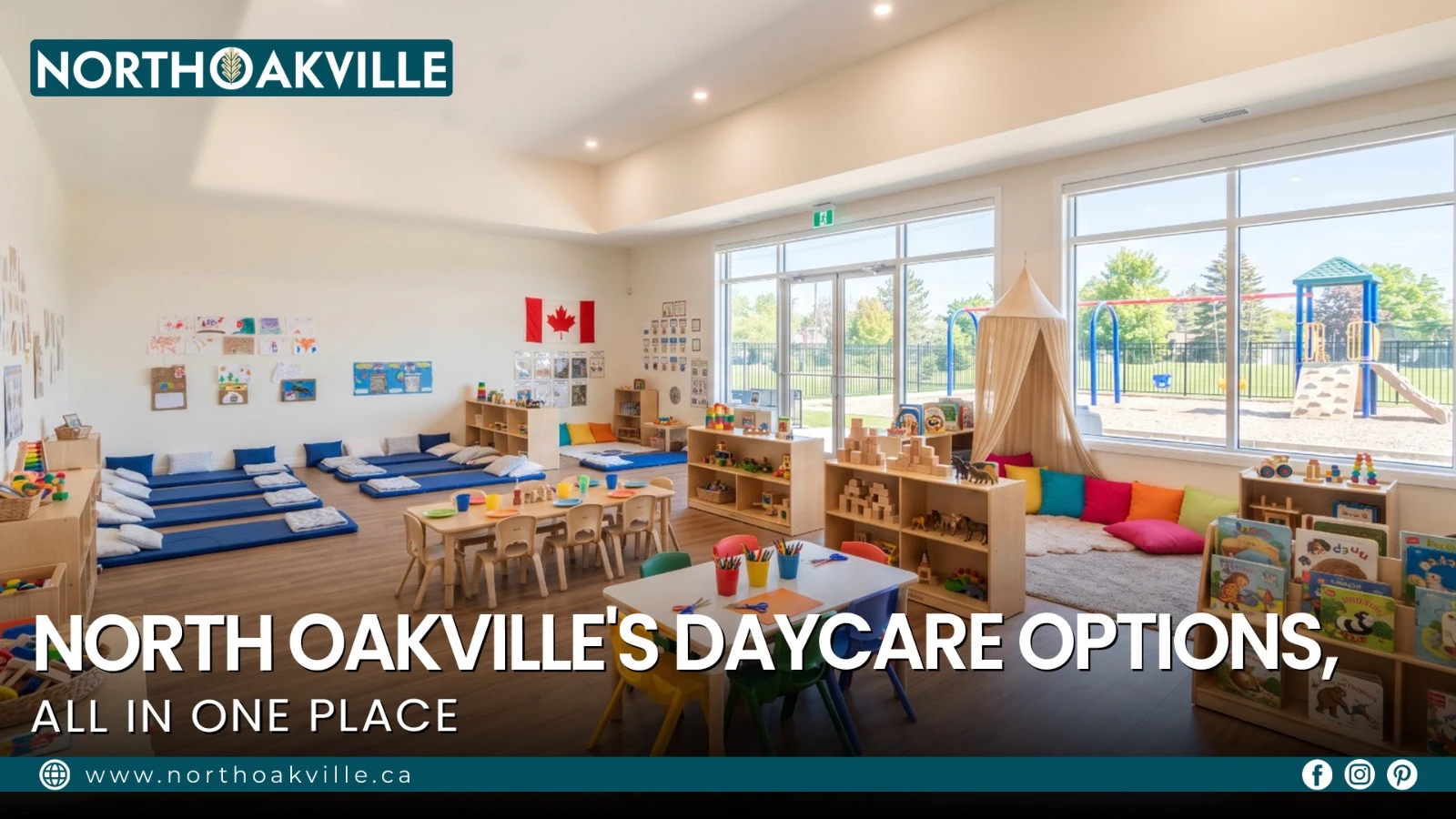
Every new family looking for child care in Oakville, Ontario eventually hits the same wall: a waitlist. North Oakville's newest neighbourhoods, full of new homes, new schools, and new parents, are filling up faster than daycare spaces across Oakville can keep pace, and parents who wait until they actually need care often find themselves months, sometimes a year, behind. This guide walks through the types of care available, what it costs, how the fee reduction program works, how waitlists really behave, and how to choose a provider you trust, so you can plan childcare in North Oakville before the clock starts ticking.
Types of Childcare Available in North Oakville
Ontario sorts childcare into a handful of categories, and the differences affect safety, price, and how easy it is to get a spot.
Licensed Child Care Centres
These are group programs run in dedicated buildings, schools, or community hubs. They are licensed and inspected by the Ontario Ministry of Education under the Child Care and Early Years Act, 2014, and they care for children from infancy through school age, with separate rooms for each age group.
Licensed Home Child Care
Licensed home child care agencies in Halton Region screen, approve, and monitor individual caregivers who look after a small group in their own home. The individual provider isn't licensed on their own. The agency is, which means home visits, required checks, and provincial oversight sit behind the arrangement.
Unlicensed Home Care
Independent home providers who aren't overseen by an agency are legal in Ontario as long as they stay within strict limits on how many children they look after. They must tell parents in writing that they are unlicensed, and they can only operate from one location.
Nannies and Au Pairs
A nanny or au pair cares for your children inside your own home. It offers the most flexibility and one-on-one attention, but it also makes you an employer with legal and tax responsibilities, covered in detail below.
Before and After School Programs
School-age programs run before the morning bell and after dismissal, usually inside or close to your child's elementary school. Most don't operate on PA days, holidays, or school breaks, so working parents often need a second plan for those dates.
Licensed vs. Unlicensed Childcare
The choice between licensed and unlicensed care is one of the biggest decisions a parent makes, so it helps to see the differences side by side.
Feature | Licensed care | Unlicensed care |
|---|---|---|
Oversight | Regularly inspected by the Ministry of Education | Not routinely inspected; the Ministry can investigate complaints |
Staff requirements | Set training, first aid, and vulnerable sector check requirements | No formal training requirement; parents verify checks and certifications themselves |
Group limits | Fixed ratios and group sizes by age | Small cap on total children, with limits on how many can be under two |
Fee reduction and subsidy | Eligible for CWELCC and regional fee subsidy | Not eligible for either |
Parent's role | Verify the licence and read the compliance record | Act as your own inspector |
Why It Matters for Safety
In licensed care, a provincial system sits behind the provider. Rules on supervision, hygiene, nutrition, background checks, and physical space are set out in law, and breaches can lead to orders, penalties, or loss of licence. In unlicensed care, much of the safety check rests on the parent. You need to confirm how many children are in the home, whether every adult there has a current police check, and whether the caregiver holds valid first aid and CPR.
Why It Matters for Cost
Unlicensed providers can't take part in the fee reduction program, so families pay whatever the provider charges, which is often more than a participating licensed centre. The child care expense deduction still applies to unlicensed care in most cases, but a tax deduction arrives months later and doesn't lower the monthly bill.
How Childcare Is Regulated in Ontario
Knowing who oversees your provider makes it easier to ask the right questions.
Who Licenses and Inspects Providers
The Ministry of Education licenses and monitors licensed child care under the Child Care and Early Years Act, 2014. Licensed centres are required to meet standards for building safety, staffing, ratios, nutrition, and programming, and provincial program advisors monitor them on a regular basis, at least once a year. The Ministry also investigates complaints about licensed and unlicensed providers, and serious violations can lead to compliance orders, penalties, or licence suspension or revocation.
How to Check That a Daycare Is Licensed
You don't need to take a centre's word for it. A quick check takes a few minutes.
Search the province's official Find Licensed Child Care tool on ontario.ca by city, postal code, or centre name to confirm the licence status and review compliance information where it is available.
Look for the licence and the licensed decal. Licensed centres and agencies are required to display them where parents can see them.
Ask for the licence number and confirm that it matches the record.
Pay attention to repeat issues. A single corrected issue is normal. The same problem showing up year after year points to a management pattern.
If a home provider says they are unlicensed, they must tell you in writing. That's legal, but it means none of the licensed protections listed above apply.
The $10 a Day Program Explained
The program's nickname runs a little ahead of the reality, so it helps to understand what it actually does.
What CWELCC Is and How Fees Drop
The Canada-Wide Early Learning and Child Care system, usually shortened to CWELCC, is a funding agreement between the federal and Ontario governments that began in 2022. Instead of sending money to parents, governments fund participating licensed centres and home child care agencies, and those operators reduce the fees they charge for children under six.
Despite the $10 a day nickname, Ontario currently applies a cap on base fees of $22 a day for eligible children, and the province's stated goal is still to move the average lower over time. The program has been extended in stages, so it is worth checking Ontario.ca or Halton Region for the current fee level before you budget.
Which Centres Participate
CWELCC daycares in Oakville make up the large majority of licensed programs in Halton Region, and Halton acts as the local service manager for the program. Enrolment is a choice each operator makes, though, so never assume. Ask any centre directly whether it is enrolled and what its base fee is.
Conditions and Exclusions
The reduction applies to children under six. In Ontario, if a child turns six between January and June, they stay eligible until June 30 of that year; if they turn six between July and December, eligibility runs until the end of that birthday month. Confirm the exact cut-off for your child with the centre and Ontario.ca, since it isn't a simple birthday rule.
Unlicensed providers can't take part.
The cap applies to the base fee. Some centres charge separately for optional extras, so ask for a full fee schedule.
Being enrolled doesn't guarantee a space. Demand is high, which is why waitlists matter so much.
How Much Does Daycare Cost in Oakville
The answer depends mostly on whether the centre is enrolled in CWELCC.
At a CWELCC Centre
As of this writing, the base fee is capped at $22 a day for eligible children under six, including infants, which works out to roughly $440 to $485 a month depending on how many weekdays that month contains. This applies the same way to an infant space as it does to a toddler or preschool space, since the cap doesn't vary by age. The average monthly cost of child care in Halton Region for families in participating centres is close to that figure, because the base fee is the same across the province for eligible children under six. Fees are subject to change as the province continues to phase in reductions, so confirm the current cap with Ontario.ca or the centre before you budget.
One more thing that changes the math: Ontario offers free full-day kindergarten starting the calendar year a child turns four, so from Junior Kindergarten onward, many families only need before and after school care rather than a full daycare fee. Kindergarten registration with the Halton public and Catholic school boards typically opens in January for the following September, so it's worth putting that date on your calendar well ahead of time.
At a Non-Participating Centre
A licensed centre that isn't in the program sets its own fees. These are commonly well over $1,000 a month, and infant care at non-participating centres is usually the most expensive age group, unlike the flat cap at a CWELCC centre. Some families end up here because a subsidized space isn't available yet, which is a big reason waitlist planning matters.
Extra Fees to Ask About
Base fees are only part of the picture. Before you accept a space, ask about:
One-time registration or administration fees
A security deposit, which is often applied to your final weeks of care
Late pickup fees, commonly charged per minute after closing time
Meals and snacks, which are usually included at full-day centres but not always at home providers
Optional extras such as app subscriptions, special programs, or camera access
Halton Region Child Care Subsidy and Tax Relief
Fee reductions aren't the only way to lower the bill, and some of these programs can be combined.
Halton Region Child Care Subsidy
The Halton Region child care subsidy helps eligible families pay for licensed care. In most cases the Region pays the provider directly and the parent covers a smaller contribution. Eligibility depends on living in Halton, needing care for work, school, or another qualifying reason, having a child within the eligible age range, and demonstrating financial need, which the Region assesses using information from your most recent Notice of Assessment. Rules and income thresholds change, so confirm current details with Halton Region before you apply.
Child Care Expense Deduction
Parents can deduct eligible childcare costs on their federal return, including licensed care, home care, nannies, and day camps. The lower-income spouse generally claims it. Annual limits per child are $8,000 for children under seven, $5,000 for ages seven to sixteen, and $11,000 for a child who qualifies for the Disability Tax Credit, and the claim is also capped at two thirds of the claiming parent's earned income.
Ontario CARE Tax Credit
The Ontario Childcare Access and Relief from Expenses credit is a refundable provincial credit for families under an income ceiling, with the percentage of eligible expenses returned falling as income rises. Because it is refundable, you receive the remaining balance even if it exceeds your provincial tax owing. Amounts and thresholds can change, so check the current figures on the Ontario government site.
Canada Child Benefit
The Canada Child Benefit isn't a childcare write-off, but it is a tax-free monthly payment for eligible families that many parents use toward care costs. The amount depends on family income and the age of each child and is adjusted for inflation each year.
Daycare Waitlists in Oakville: How Early to Apply
Parents often ask how early to apply for a daycare waitlist in Oakville, and the honest answer is earlier than feels reasonable.
How Long the Wait Really Is
Infant spaces are the hardest to find because the required ratios are tight, so each room holds only a handful of babies. Infant waits are commonly reported in the range of a year or more at popular centres, with toddler and preschool waits usually shorter. Because demand is high across the GTA, many parents apply during pregnancy, and it is common to write "Baby" plus your last name with an expected due date on application forms.
There Isn't a Single Central Waitlist
Unlike some Ontario municipalities, Halton generally doesn't run a single registry that covers every centre. Parents typically apply to each centre separately, and most centres manage their own lists. Check with Halton Region for the current situation, since systems can change.
Practical Waitlist Tips
Build a shortlist using the Halton child care directory and the province's licensed child care search.
Apply to several centres, not just your first choice.
Keep a simple spreadsheet with application dates, contact names, and follow-up dates.
Follow up every couple of months so your file stays active.
Ask each centre what happens if your child turns 18 months or 30 months before a spot opens.
For school-age programs, watch for registration windows through your school board, since they usually open well before the school year.
Staff Ratios, Group Sizes, and Room Transitions
Ontario law sets the maximum number of children per staff member and per room.
Age group | Age range | Staff to children | Maximum group size |
|---|---|---|---|
Infant | Under 18 months | 3 staff per 10 children | 10 |
Toddler | 18 to 30 months | 1 to 5 | 15 |
Preschool | 30 months to kindergarten age | 1 to 8 | 24 |
Every age group requires a set number of registered early childhood educators on staff. Ask a centre how many of its educators in each room hold that qualification.
When Children Move Between Rooms
Children generally move up when they reach the next age category, but timing often depends on when a space opens in the next room. A child can be ready before a spot is free, and a room can be full when a child ages up. Ask any centre how it handles those gaps, because it affects your child's day-to-day routine and sometimes your budget.
Program Types: Play-Based, Montessori, Reggio, and French Options
Most families choose based on their child's personality as much as their own priorities.
Play-Based Programs
This is the most common approach and it lines up with the province's early learning framework. Learning is child-led but intentionally planned, using block building, sensory bins, and dramatic play to build early literacy, math, and social skills.
Montessori Preschool in Oakville
A Montessori preschool in Oakville is typically calm, orderly, and built around independent work with specific self-correcting materials. Classrooms often mix ages, and children progress at their own pace. It suits children who like focused, self-directed activities, though some Montessori programs are private schools rather than licensed child care, so check the licensing status if you're counting on fee reductions.
Reggio Emilia Inspired Programs
Reggio programs treat the classroom environment as a teacher, emphasize group projects, and value artistic expression. Teachers document children's work to show how learning develops. It tends to suit social, creative children.
Hybrid Approaches
Some centres blend methods. Ask what the daily routine really looks like, not just which label the centre uses.
French Language and Bilingual Options
Options range from fully French programs, usually tied to French school boards and aimed at families with a French-speaking parent, to mainstream centres that add French as an enrichment. Some preschools also focus on preparing children for later French immersion. If French immersion is a long-term goal, ask how the centre's program connects to your school board's entry point.
Home Childcare in Detail
Home care sits between a formal centre and informal arrangements, and the details matter.
Licensed Home Child Care
An individual provider working through a licensed agency can care for up to six children under 13, which must include any of their own children under four, and no more than three of those children can be under two. Agency staff visit, screen, and monitor providers, and people living or working in the home must complete vulnerable sector checks.
Pros and Cons Compared With a Centre
Licensed home care | Licensed centre | |
|---|---|---|
Setting | Quiet, homelike, small group | Larger, busier, more structured |
Ages | Mixed ages, siblings can stay together | Separate rooms by age |
Reliability | Depends on one caregiver, though some agencies offer backup | Staff rotate, so the program keeps running |
Fee reduction | Eligible if the agency is enrolled | Eligible if the centre is enrolled |
Hours | Sometimes more flexible | Fixed operating hours |
Risks of Unlicensed Home Daycare
An unlicensed provider may care for a maximum of five children under 13, and there are additional limits on how many can be under two. The main risks are the lack of routine oversight, no guaranteed training or first aid, the chance that group limits are quietly exceeded, and exclusion from fee reduction programs.
Questions to Ask an Unlicensed Provider
How many children do you care for, and what are their ages?
Can you provide a current vulnerable sector police check for you and every adult in the home?
Do you hold current first aid and infant and child CPR certification?
What is your plan if you or your own child is sick?
Can you show me your smoke and carbon monoxide alarms, fire extinguisher, and fire escape route?
Nannies, Au Pairs, and Nanny Shares
Private in-home care is a common backup when centre waitlists are long, but it works very differently from a daycare.
How the Costs Compare
A full-time nanny typically costs several times what a fee-reduced daycare space does, and a shared nanny arrangement between two families lowers each family's share while adding coordination work. An au pair may cost less in wages, but Canada has no official government-run au pair program, so most au pairs come here on a working holiday visa instead, and you're adding room and board on top.
Legal Responsibilities for Parents
Hiring a nanny makes you an employer. Treating a nanny as an independent contractor to avoid these responsibilities can create real tax problems, so it's worth getting advice.
Canada Revenue Agency: register for a payroll account, deduct income tax, CPP, and EI from pay, remit the employer's share of CPP and EI, and issue a T4 each year.
Employment Standards Act: pay at least minimum wage, overtime after 44 hours in a week, vacation pay, and public holiday pay, and provide notice or pay in lieu when ending employment without cause.
Workplace insurance: depending on the hours worked, you may need to register with the WSIB, so confirm the current rule for household employers.
Before and After School Care in North Oakville
For families with kids in elementary school, before and after school care programs in Oakville are usually the missing piece of the daily routine.
School-Based Programs
Programs typically run before the morning bell and after dismissal on instructional days, inside the school or nearby. Both the Halton District School Board and the Halton Catholic District School Board partner with licensed providers, including community organizations such as the YMCA, and registration usually happens through the school board's system. Full-time spots are often prioritized over part-time requests, and registration commonly opens well ahead of the school year, so check dates early.
PA Days, March Break, and Summer Camps
These are the gaps parents most often miss. Some providers offer PA day and school-break programs, community centres and private schools run camps, and the Town of Oakville runs summer camps at community facilities. Registration for popular camps can open months in advance, so put those dates in your calendar.
Support for Special Needs, Allergies, and Medical Conditions
Licensed programs in Halton are expected to include children with a range of needs.
Inclusion and Early Intervention
Resource consultants, including through The Halton Resource Connection, can work with educators in licensed programs to support children with developmental or behavioral needs, and regional inclusion funding can help a centre add extra staff when a child needs closer support. Ask a centre about its experience with your child's specific needs before you commit.
Allergies and Medical Plans
Licensed centres are required to have anaphylaxis policies and individual plans for children with life-threatening allergies, and staff must know how to respond, including how to use an epinephrine auto-injector. Many centres are nut-aware or nut-free. For conditions such as asthma, diabetes, or epilepsy, expect a written individual medical plan and signed consent for any medication.
Childcare by Neighbourhood in North Oakville
Where you live shapes how much choice you have and how far you'll drive.
The Preserve and Glenorchy
Families searching for a daycare near The Preserve in Oakville will find that newer communities tend to attract a mix of corporate chains, not-for-profit centres, and home care agencies, because they were built with young families in mind. Newer schools in the area are also designed with space for licensed child care, which adds spaces but rarely enough to end waitlists.
The Dundas Corridor
Many parents look for a daycare on Dundas St. in Oakville because it sits on the main route between home, work, and highway access. The corridor makes drop-off convenient for commuters, though rush hour traffic can turn a five-minute detour into a twenty-minute one.
Joshua Creek and River Oaks
Older and more established areas usually have a longer track record of centres, including not-for-profit programs and Montessori options. Some are just outside the North Oakville boundary, so map the drive before you decide.
How North Oakville Compares With Nearby Cities
Under CWELCC, eligible families across Ontario currently pay the same capped base fee, so the difference between North Oakville, Milton, Burlington, and Mississauga isn't the fee. It is availability. Growing communities across the GTA all report long waitlists, and for families using non-participating centres, market fees in this part of the GTA are among the higher ones in the province. Search across a few nearby communities if your commute allows.
Hours, Location, and Commuting
For many North Oakville parents, the daycare has to fit inside a commute.
Typical Operating Hours
Most full-day licensed centres run from early morning to about 6 p.m., Monday to Friday, and close on statutory holidays. Late fees usually start the minute after closing time, so a delayed GO train or a QEW backup can get expensive. True extended-hour licensed care is uncommon, and families with longer commutes often rely on a home care provider with flexible hours, or add a part-time nanny for the late pickup.
Choosing Between Home, Work, and the GO Station
A daycare near the GO station suits daily rail commuters, a centre close to home suits families with older children in local schools, and one near work makes it easier to respond quickly if your child gets sick. Test the drive during rush hour before you commit.
Part-Time, Flexible, and Drop-In Options
Part-time enrolment exists at some centres, but full-time applicants are usually prioritized, so those spots can be as hard to find as full-time ones. Licensed home child care can offer more flexible schedules. True drop-in licensed care is rare because of provincial tracking and ratio rules, so parents with irregular hours usually rely on a mix of options, such as a home provider, occasional childminding at a recreation centre, or a nanny.
Touring a Daycare: What to Ask and What to Watch For
There is no single list of the best daycares in Oakville, because the best fit depends on your child, your schedule, and your budget. A tour is where you find out how a place really works.
What to Look For and Ask
Staff: Do educators look calm and engaged at children's eye level? Ask about staff turnover and how absences are covered.
Program: Does the art on the walls look like the children's own work? Ask how the daily schedule balances play, outdoor time, and rest.
Safety and hygiene: Is entry secured? Are diapering areas and washrooms clean? Ask about pickup authorization and cleaning routines.
Communication: Ask how the centre shares daily updates and how it raises concerns.
Licence and record: Ask for the licence number and verify it yourself.
Red Flags
Vague or defensive answers about inspections, ratios, or turnover
A room that is unnaturally silent, or children made to sit still for long stretches
Visible safety issues such as unlocked doors, chemicals within reach, or poorly maintained play equipment
The same compliance issue appearing again and again
Refusal to show you the kitchen, sleep room, or outdoor play area
Childcare and Real Estate: What Young Families Should Consider
Childcare access increasingly shapes where families choose to buy or rent, and it deserves a place in the affordability math.
How Childcare Influences Neighbourhood Choice
Communities that cluster schools, parks, and transit tend to draw young families and command strong demand. Renting families who finally secure a coveted spot often stay put, which is one reason homes and rentals near well-regarded centres can be competitive.
What First-Time Buyers Should Weigh
If you're one of the first-time buyers comparing North Oakville neighbourhoods, look beyond price:
Budget for the possibility of a period at non-participating market rates if you're waitlisted after moving in. Build that into your mortgage pre-approval planning rather than treating it as an afterthought.
Test the commute to both the daycare and your workplace at rush hour.
Check which schools serve the address and what before and after-school programs they offer.
Look at nearby family-friendly parks and community facilities, since they extend your options for after-school hours and weekends.
If you're moving to a new home, you can start the waitlist process before you close, since many centres accept applications from families who haven't arrived yet.
Support for Newcomer Families
Newcomers often face the same waitlists plus language and paperwork barriers.
Local settlement agencies can explain the difference between licensed and unlicensed care, help with applications, and point families toward the Halton Region fee subsidy. Some language training programs for newcomers offer on-site childminding so parents can attend class while their children are looked after. Halton's child care information line, run through The Halton Resource Connection, can also help you find centres that fit specific cultural or language needs. Many mainstream centres accommodate dietary requirements such as halal, kosher, and vegetarian meals, so ask early.
Final Thoughts
Childcare in North Oakville rewards the families who plan early and stay organized. Know the difference between licensed and unlicensed care, confirm which centres are enrolled in the fee reduction program, apply to several places well before you need a space, and use a tour to test how a centre actually runs, not just how it markets itself. Add subsidies and tax relief on top, and the numbers become manageable for most households. Fees, rules, and program details change over time, so confirm current information with the province and Halton Region before you make final decisions.
Buying or renting in North Oakville and still building your childcare shortlist? Tell us the neighbourhoods on your list, and we can help you find a home that keeps the morning daycare run short.
Fees, subsidy rules, tax limits, and program details can change. Confirm current information with the Ontario Ministry of Education, Halton Region, the Canada Revenue Agency, and each centre before making decisions.
FAQs
How much does daycare cost in Oakville?
At a licensed centre enrolled in the fee reduction program, the base fee is currently capped at $22 a day for eligible children under six, which works out to roughly $440 to $485 a month. Non-participating centres set their own fees and are commonly well over $1,000 a month, with infant care usually the most expensive at those market-rate centres.
What is the $10 a day childcare program in Ontario?
It is the Canada-Wide Early Learning and Child Care system, a federal and provincial funding program that lowers the fees charged by participating licensed centres for children under six. Despite the nickname, Ontario currently applies a cap of $22 a day on base fees.
Are all licensed daycares in Ontario $22 a day?
No. Only licensed programs enrolled in the fee reduction system apply the cap. Licensed centres that aren't enrolled set their own fees, and unlicensed providers can't take part.
How do I apply for a child care subsidy in Halton Region?
You apply to Halton Region, which assesses eligibility based on where you live, your reason for needing care, your child's age, and your financial need. Check the Region's website for the current application steps and income information.
What is the difference between licensed and unlicensed daycare in Ontario?
Licensed care is overseen by the Ministry of Education, follows set ratios, staffing, and safety standards, and can take part in fee reduction and subsidy programs. Unlicensed care is not routinely inspected, has no formal training requirement, and isn't eligible for those programs.
How many children can an unlicensed daycare have in Ontario?
An unlicensed home provider can care for a maximum of five children under 13, with additional limits on how many can be under two, and must tell parents in writing that they are unlicensed.
How do I check if a daycare is licensed in Ontario?
Use the province's Find Licensed Child Care search on ontario.ca, look for the posted licence and decal at the centre, and ask for the licence number so you can match it to the record.
How early should you apply for daycare waitlists in Oakville?
As early as you can. Many parents apply during pregnancy for infant spaces, since waits for babies can run a year or more at popular centres.
Is there a centralized waitlist for daycares in Halton?
Generally no. Parents typically apply to each centre separately, so keep track of your applications and follow up periodically. Confirm the current arrangement with Halton Region.
What qualifications do daycare workers need in Ontario?
Licensed centres must have a required share of their staff be registered early childhood educators, and staff need vulnerable sector checks and valid first aid and CPR. Home providers working through a licensed agency must also meet checks and first aid requirements.