
Living in North Oakville: Why It Is So Popular in 2026
August 20, 2026
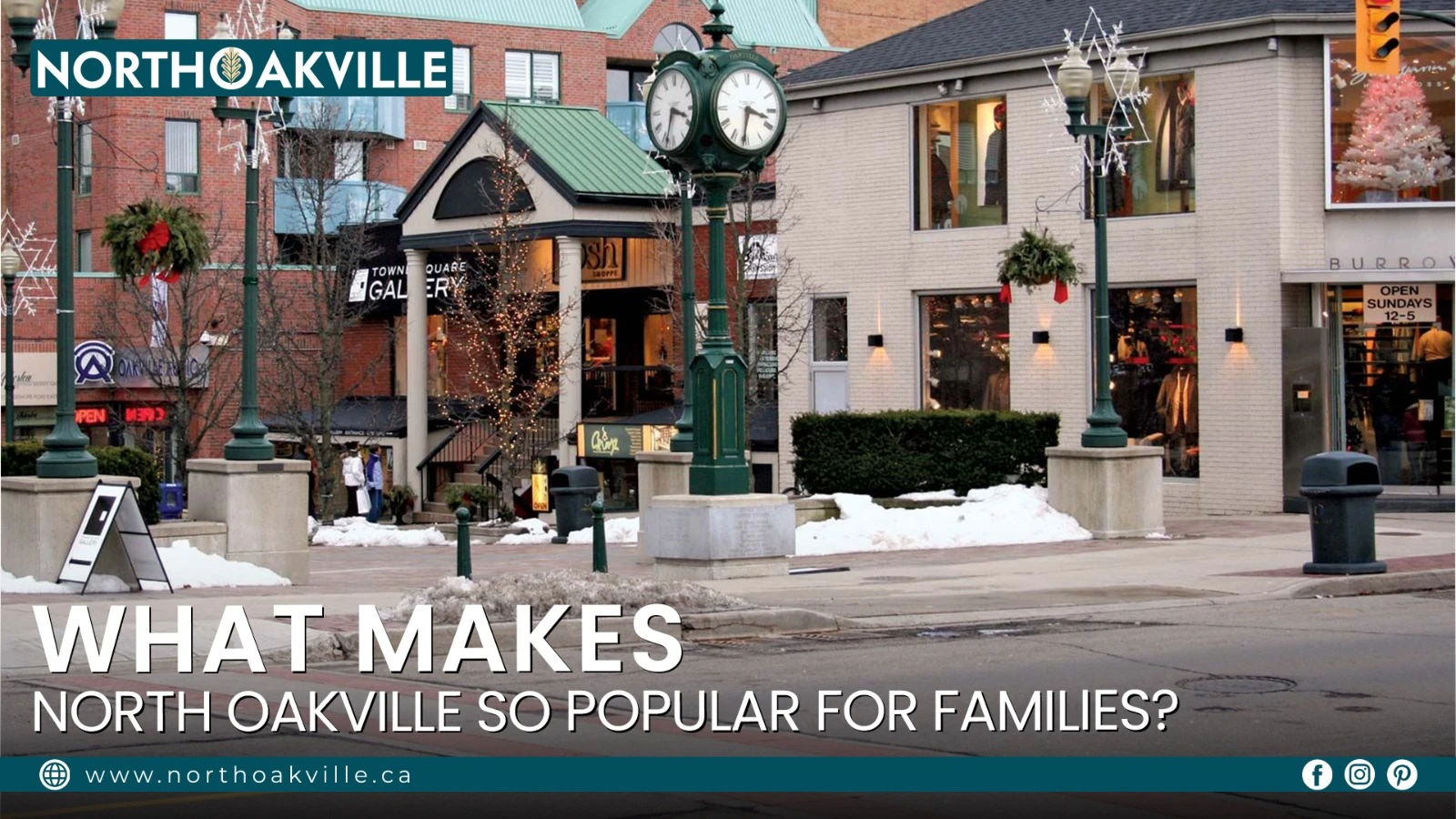
North Oakville has changed dramatically over the past few years. What was once largely open land and low-density subdivisions has grown into one of the Greater Toronto Area's most closely watched residential communities — with new homes, schools, parks, shopping centres and transportation upgrades steadily turning it into a complete, self-sufficient community.
For families considering a move, the appeal goes well beyond having a newer house. Living in North Oakville means access to modern master-planned neighbourhoods, highly regarded schools, extensive green space, everyday shopping, and convenient connections to Toronto, Mississauga, Milton and Burlington.
At the same time, North Oakville is still a community in transition. Construction, peak-hour traffic, compact lots and shifting school boundaries are realities buyers should understand before making a decision. This guide brings together everything homebuyers and families need to know about the area in 2026 — what makes it popular, what to watch out for, and how its different neighbourhoods compare.
Why North Oakville Continues to Attract Buyers
North Oakville's popularity isn't the result of one standout feature. It comes from the way several pieces fit together: master-planned neighbourhoods, family-oriented housing, expanding schools, major recreation facilities, growing retail, protected natural areas, and strong access to the region's major highways.
For buyers comparing different parts of Oakville, that combination explains the ongoing draw. The area offers a newer suburban environment while remaining tightly connected to the wider GTA — giving families the chance to buy into a community that's still developing rather than one that has already reached its final form.
A Location Built for GTA Commuters
The community sits between major transportation corridors, giving residents several ways to get around the region. Highway 407 provides east-west access across the northern GTA, while Highway 403 and the QEW connect residents to Mississauga, Burlington, Hamilton and Toronto. Oakville GO Station adds another option — residents can drive south along Trafalgar Road and connect with GO rail service toward Union Station as an alternative to driving into the city.
This multi-directional connectivity is especially valuable for households where family members work in different parts of the GTA. One parent may commute toward Toronto, another toward Mississauga or Milton, children may have sports practice at Sixteen Mile, and everyone still needs grocery stores and services nearby. North Oakville's road network and growing transit infrastructure are essentially designed around that increasingly complex suburban lifestyle.
A Community Designed Around Family Life
North Oakville has been developed with a noticeably different planning philosophy than many older suburban neighbourhoods. New residential communities have been built alongside parks, pathways, schools, stormwater ponds and natural areas, with sidewalks and modern infrastructure as the norm rather than the exception.
Neighbourhoods such as The Preserve, Glenorchy and Joshua Creek each have their own character, but they share common traits: relatively modern housing, family-oriented streets, nearby schools and easy access to outdoor recreation.
The housing mix also supports different life stages. Detached homes remain popular with larger families, while freehold townhomes and newer condo developments give buyers a lower entry point or less exterior maintenance — appealing to first-time buyers, downsizers and investors alike. For many buyers, the newer housing stock is also attractive simply because it comes with fewer of the renovation requirements associated with older Oakville properties.
Schools Are a Major Part of the Appeal
Education is arguably one of the strongest reasons families consider North Oakville in the first place, and the area benefits from both established secondary schools and a steadily expanding network of newer local schools.
Public education is provided through the Halton District School Board (HDSB), while Catholic families are served by the Halton Catholic District School Board (HCDSB). Schools such as Oodenawi Public School and Dr. David R. Williams Public School serve growing communities in North Oakville, while established secondary schools south of Dundas have historically served portions of the area's student population. Catholic families have options including St. Gregory the Great Catholic Elementary School and Holy Trinity Catholic Secondary School.
At the secondary level, Iroquois Ridge High School remains an important draw for families in parts of North Oakville — its recent Fraser Institute ranking was reported at 9.3/10, placing it eighth among Ontario secondary schools. A new North Oakville secondary school is also planned for Sixth Line, a significant development given how much population growth has increased pressure on existing schools. HCDSB planning documents point to continued enrolment growth across the North Oakville Family of Schools and identify the need for additional elementary capacity as residential development continues.
Important note for buyers: school boundaries are not fixed. Accommodation areas can change as new schools open and enrolment patterns evolve, so anyone buying primarily for a specific school should verify the current designated catchment directly with the appropriate school board before purchasing — not rely on an older listing or neighbourhood description.
Outdoor Recreation Is One of North Oakville's Biggest Strengths
North Oakville offers something difficult to recreate once a community has already been built out: an extensive, connected network of green space.
The Natural Heritage System protects woodlands, wetlands, valleys and other environmentally significant areas throughout the broader development area. Rather than treating nature as isolated leftover parcels, the planning approach links these spaces together with trails and neighbourhood parks — creek corridors, ponds and pathways that give communities like Joshua Creek and the areas around Sixteen Mile Creek a genuine connection to green space. For families, that means playgrounds, walking routes and splash pads close to home; for runners and cyclists, it means routes through different parts of Oakville without relying entirely on major roads.
Sixteen Mile Sports Complex
The Sixteen Mile Sports Complex has become an especially important recreational anchor for North Oakville. The expanded facility provides extensive indoor and outdoor amenities, including hockey facilities, aquatic amenities, gymnasium space, fitness facilities, community programming and an Oakville Public Library branch, alongside sports fields supporting activities for children, teens and adults.
For families with kids in organized sports, this changes the practical experience of daily life — swimming, hockey, library visits and community programming can become a short local trip instead of a long evening commute across town. The Town of Oakville's capital planning also continues to budget for additional parks, trails, village squares and sports infrastructure across the area's growing communities, reinforcing the idea that recreation here is being built as part of the community rather than added on afterward.
Shopping and Everyday Convenience
North Oakville has developed into a much more self-sufficient community than it was even a few years ago.
The Uptown Core, around Dundas Street and Trafalgar Road, provides access to major grocery stores, pharmacies, banks, restaurants, fitness facilities and everyday retailers. The Dundas Street and Neyagawa Boulevard area forms another important commercial cluster, particularly for residents of Glenorchy and The Preserve, with grocery shopping, healthcare services, restaurants, childcare and professional services increasingly available close to home.
There is one trade-off worth knowing: North Oakville doesn't yet have the traditional main-street atmosphere found in downtown Oakville or Bronte Village. Much of its commercial environment is still plaza- and shopping-centre-based, though that's changing as mixed-use developments introduce more residential density and street-level retail. Buyers who prioritize independent boutiques, historic streets and lakeside dining may still prefer South Oakville.
What Is It Like to Live in North Oakville?
The community atmosphere is distinctly family-oriented. On a typical day, neighbourhood streets and pathways are active with parents walking with children, people exercising, cyclists, dog owners and residents using nearby parks — a more social suburban environment than some established neighbourhoods where larger lots and quieter streets are the norm.
North Oakville is also culturally diverse, reflecting the broader GTA population, and that diversity has contributed to a growing selection of restaurants, grocery options and community activities. The overall feel is modern, active and family-focused rather than centred around nightlife. For some buyers, that's exactly the draw; for others, the quieter character and established streetscapes of older Oakville may be more appealing.
The Different Neighbourhoods Offer Different Experiences
North Oakville isn't one uniform housing market. Two properties sharing a similar Oakville address can offer very different day-to-day lifestyles.
Area | What Makes It Attractive | Typical Buyer |
|---|---|---|
The Preserve | Newer detached homes and townhouses, parks, schools and family-oriented streets | Growing families |
Glenorchy | Strong access to the Sixteen Mile Sports Complex, green space and Dundas Street commercial growth | Families and move-up buyers |
Joshua Creek | Executive homes, access toward Mississauga/403/407, established schools and natural areas | Higher-budget families |
Uptown Core | Condos, shopping, services and transit-oriented, higher-density living | First-time buyers, professionals and downsizers |
Rural Oakville | The continuing edge of growth, with new communities still being developed | Buyers planning for long-term growth |
Housing Options and Affordability
North Oakville offers a broad range of housing compared with many established Oakville neighbourhoods — condominium apartments, stacked townhomes, freehold townhouses and detached houses.
Condos generally provide the lowest entry point into the market, making them relevant to first-time buyers, downsizers and investors. Townhomes sit between condo living and detached homes; freehold townhouses can be particularly appealing to families who want multiple bedrooms and outdoor space without the price tag of a large detached property. Detached homes remain the dominant choice for many move-up families, though prices vary considerably by neighbourhood, lot size, age, upgrades and proximity to schools and amenities.
It's worth remembering that affordability isn't just about the advertised purchase price. Mortgage payments, property taxes, insurance, maintenance and — where applicable — condo fees all factor into the real monthly cost.
New Construction vs. Resale
One reason North Oakville attracts buyers is its relatively modern housing stock: contemporary layouts, updated mechanical systems, better energy efficiency and fewer immediate renovation needs. But new construction doesn't automatically mean better value — buyers should carefully compare builder pricing against comparable resale properties, since new homes can involve development charges, upgrades and closing adjustments that add to the final cost.
Resale homes, on the other hand, offer something new construction can't: the chance to see the finished neighbourhood, surrounding properties and established infrastructure before committing. For many buyers, the decision ultimately comes down to whether they value a brand-new home more than a clearer picture of the property and neighbourhood they're buying into.
New Infrastructure Is Still Being Added
Perhaps the biggest difference between North Oakville and an established neighbourhood is that the community isn't finished — and that cuts both ways.
The advantage is that residents get to watch new schools, parks, recreation facilities, roads, retail spaces and community infrastructure arrive around them over time. The disadvantage is that construction remains part of everyday life. Education planning illustrates just how much growth is still ahead: HCDSB documents identify additional elementary schools required in North Oakville as development continues, including facilities proposed for future years.
Over the next five to ten years, additional residential development, schools, transportation improvements and commercial projects are expected to reshape several areas. The Uptown Core is moving toward greater density with mixed-use projects introducing more residential towers and street-level commercial space, while the Trafalgar Road corridor is another key growth area focused on higher-density development and improved transportation connections. In short, buyers today aren't just purchasing a home in an existing neighbourhood — they're buying into a community whose final form will look considerably different than it does right now.
The Trade-Offs Buyers Should Understand
North Oakville isn't perfect, and understanding its limitations makes for an easier buying decision.
Construction is ongoing. Roads, schools and commercial projects are still being built, which can mean temporary traffic and noise.
Lots can be compact. Buyers who prioritize backyard privacy and space may prefer older Oakville communities.
Peak-hour congestion can affect Trafalgar Road and Dundas Street, particularly around busy intersections and school zones.
Less historic character. The area still lacks the established village atmosphere of downtown Oakville and Bronte.
School boundaries can shift as the population grows, so buyers should always verify current details rather than relying on older listings.
Fewer mature trees in some newer sections compared with established Oakville neighbourhoods.
Why North Oakville Stands Out
Factor | Why It Matters |
|---|---|
Newer homes | Modern layouts and fewer immediate renovation concerns |
Schools | Strong family appeal and expanding educational infrastructure |
Parks and trails | Easy, connected access to outdoor recreation |
Sixteen Mile Sports Complex | Major indoor and outdoor recreation close to home |
Shopping | Everyday necessities increasingly available within the community |
Connectivity | Access to Highway 407, Highway 403, the QEW and Oakville GO |
Housing choice | Detached homes, townhomes and condos |
Future development | More schools, parks, retail and infrastructure planned |
Family atmosphere | Neighbourhoods designed around households and children |
No single feature explains North Oakville's popularity — it's the combination that makes the area compelling.
Is North Oakville a Good Place to Live in 2026?
For families seeking modern homes, strong community infrastructure, good schools, recreation and convenient GTA access, North Oakville remains one of the most compelling suburban options in the western GTA. Its biggest advantage may be that the community is being built around the needs of today's households, rather than adapting decades-old infrastructure to modern demand.
At the same time, buyers need to be comfortable with a neighbourhood that's still evolving. The best choice ultimately depends on priorities: someone looking for a mature neighbourhood with large lots and established streets may prefer South Oakville; a buyer prioritizing affordability may compare North Oakville with Milton or Burlington. But for families who want newer housing, good schools, parks, recreation and access to major GTA employment centres all in one location, North Oakville offers a particularly strong combination.
The area is no longer simply a collection of new subdivisions — it's becoming a complete urban community. The decisions buyers make today will determine which parts of North Oakville offer the best combination of convenience, lifestyle and long-term value.
For anyone comparing homes for sale in North Oakville, the smartest approach is to look beyond the house itself. The surrounding school, park network, road access, shopping options and planned future development can influence everyday life just as much as the property.
FAQs
Why is North Oakville so popular?
North Oakville combines newer homes, family-oriented neighbourhoods, schools, parks, trails, recreation facilities, shopping and GTA connectivity — and continued infrastructure development keeps attracting buyers who want to live in a growing community.
Is North Oakville good for families?
Yes. Families are among the area's primary buyer groups because of its newer housing, schools, parks, playgrounds, recreation facilities and expanding community infrastructure.
What are the best neighbourhoods in North Oakville?
The Preserve, Glenorchy, Joshua Creek, Rural Oakville and the Uptown Core each offer different advantages. The best choice depends on budget, housing preference, school requirements, commute and desired lifestyle.
Are there good schools in North Oakville?
The area is served by the Halton District School Board and Halton Catholic District School Board, with existing schools and additional facilities planned as the population grows. School boundaries should always be confirmed against the specific property address.
Is North Oakville still developing?
Yes. Significant residential, commercial, transportation, school, park and recreation development is ongoing, with HCDSB planning documents showing that additional elementary capacity will be required as the population expands.
Does North Oakville have good parks and recreation?
Yes. The area has an expanding network of parks, trails and sports facilities, anchored by the Sixteen Mile Sports Complex, with the Town continuing to budget for additional parks and community spaces in growing neighbourhoods.
Is North Oakville better than South Oakville?
Neither is universally better. North Oakville generally suits buyers who prefer newer homes, modern infrastructure and a growing family-oriented environment. South Oakville tends to appeal more to buyers who prioritize mature trees, established neighbourhoods, larger lots and proximity to the lakefront.
Is North Oakville a good place to invest in real estate?
It can be, given ongoing population growth, infrastructure investment and demand for newer housing. That said, investment decisions should weigh the specific property, purchase price, rental demand, carrying costs, future supply and applicable zoning rather than relying solely on the area's general popularity.
Tags
Recent Blogs

Best Coffee Shops in North Oakville | Top Local Cafés
August 20, 2026
Read More
Why Families Are Moving to North Oakville in 2026
August 18, 2026
Read More
North Oakville Real Estate Mid-Year Market Report 2026
July 4, 2026
Read More
North Oakville to Toronto Commute: Real Travel Times & Routes
April 24, 2026
Read More