North Oakville vs South Oakville: Which Should You Choose?
Discover the key differences in housing, commute, schools, and lifestyle between North Oakville and South Oakville before deciding where to buy.
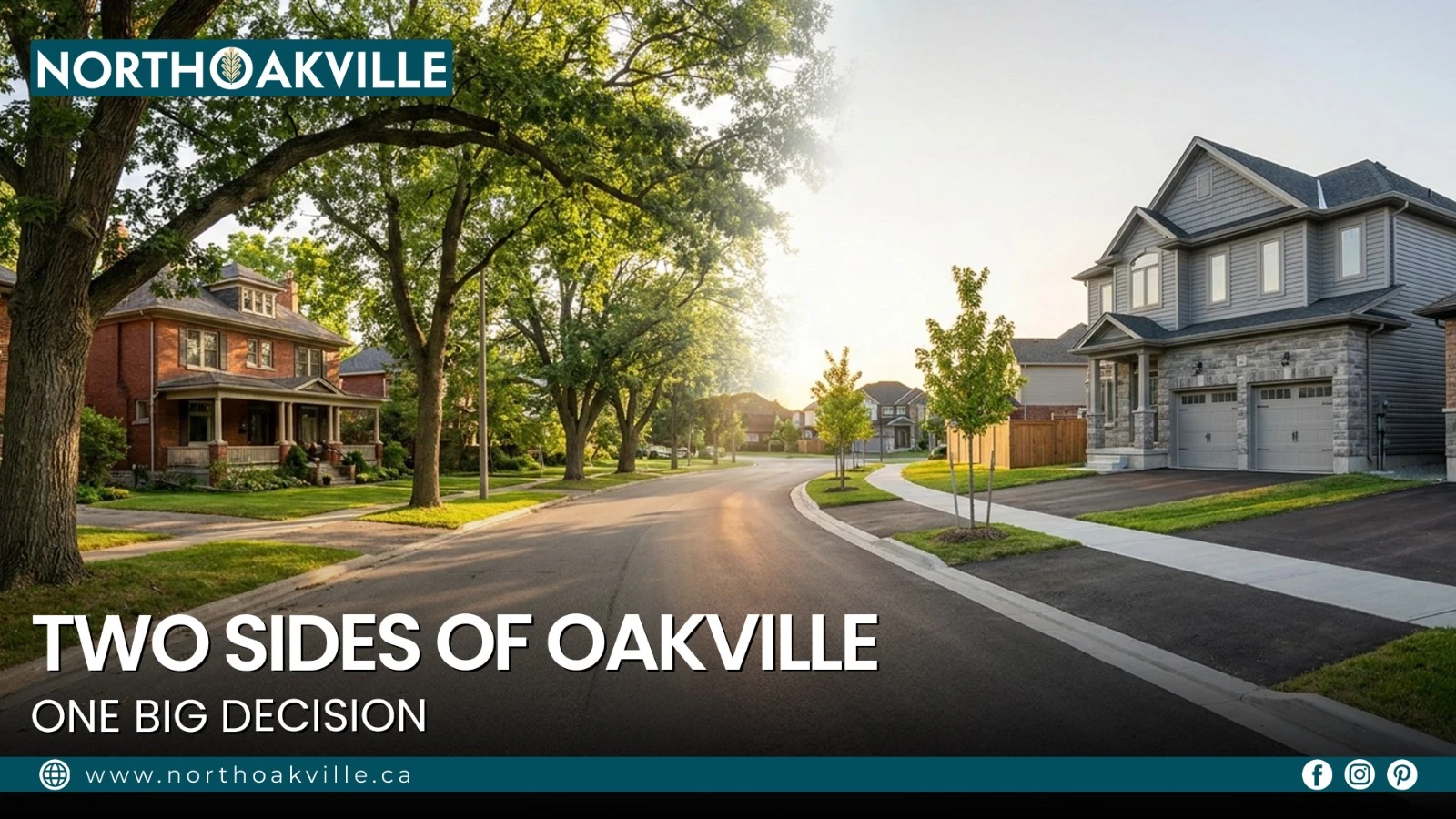
When it comes to buying real estate in the Greater Toronto Area, few municipalities carry the reputation of Oakville, Ontario. Consistently ranked among the best places to live in Canada, this lakeside town offers strong schools, low crime rates, and abundant green space. But if you're moving to Oakville, you'll quickly notice a real divide between North Oakville and South Oakville — two halves of the same town that offer genuinely different lifestyles, housing styles, and price points. Understanding this split is the single most useful piece of context you can have before comparing Oakville neighbourhoods against each other.
Whether you're a first-time homebuyer, a growing family, or an investor, this guide breaks down the practical differences so you can figure out which side of town actually fits how you want to live.
Where Is the Boundary Between North and South Oakville?
Local listings and everyday conversation often draw the line at the QEW, but the town's actual planning framework is more precise.
The official planning boundary: Under the Town of Oakville's Official Plan, Dundas Street is the dividing line. Lands north of Dundas Street, down to Highway 407, fall under the North Oakville Secondary Plans. Everything south of Dundas follows the Livable Oakville Plan.
The everyday perception: In casual use and most real estate listings, "South Oakville" tends to mean the established neighbourhoods south of the QEW down to Lake Ontario, while "North Oakville" refers to the newer, rapidly developing communities north of Upper Middle Road and Dundas Street. Upper Middle Road and the QEW often act as an informal secondary buffer in that in-between stretch of town.
If you're comparing specific listings, it's worth confirming which secondary plan actually governs a property rather than relying on the QEW as a hard line — the two aren't always exactly the same boundary.
Development History: Old Town vs New Growth
The visual contrast between these two halves of Oakville comes down to when — and why — they were built.
Feature | South Oakville | North Oakville |
|---|---|---|
Origins | Settled in the early 1800s as a shipbuilding and timber port | Historic farming hamlets (Palermo, Glenorchy) until recent development |
Primary era | Century-old homes mixed with mid-20th-century builds | Predominantly post-2000 development, with rapid growth since 2010 |
Design concept | Organic growth, irregular lots, mature tree canopy | Master-planned, structured grid systems |
South Oakville contains the town's original settlement, with protected heritage properties and a street pattern built around pedestrian access to the lake. North Oakville, by contrast, was mostly open farmland until the late 1990s. Provincial "smart growth" policies aimed at curbing sprawl pushed the town toward higher-density, master-planned development here, which is why communities like The Preserve and Glenorchy feel so distinctly newer and more structured than the streets south of Dundas.
Housing Types and Architectural Styles
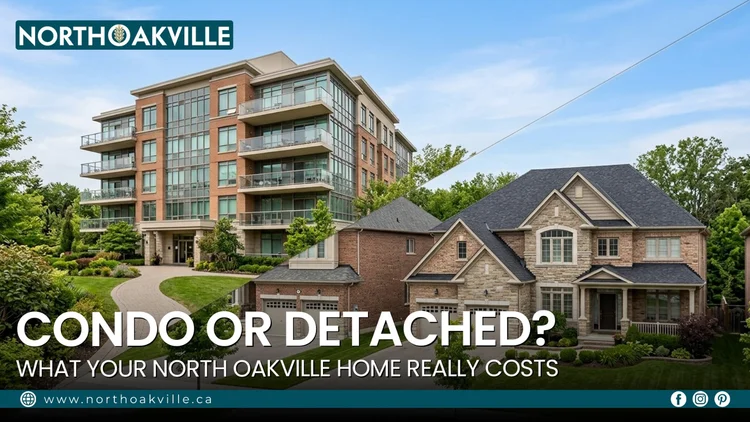
South Oakville is dominated by detached homes — everything from mid-century bungalows and split-levels to large custom-built estates — along with historic character homes near the downtown core. Multi-family housing here tends to mean boutique, low-rise luxury condos along the lakeshore or older, established apartment buildings.
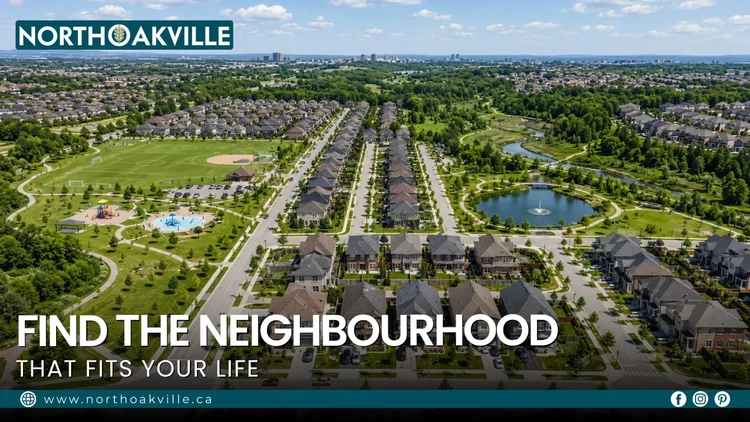
North Oakville offers a denser mix: modern townhomes (stacked, rear-lane, and traditional freehold), semi-detached homes, and higher-density condominium buildings. Detached homes here are typically narrower, multi-storey designs built to maximize square footage on smaller lots.
Age of Housing Stock
South Oakville's housing stock generally ranges from 50 to well over 100 years old, with a wave of teardown-and-rebuild gentrification over the past couple of decades replacing older bungalows with new custom homes. North Oakville is a much newer frontier — most of its housing stock is under 10 to 15 years old, with large portions built after 2015 and some areas still under active construction.
Lot Sizes and Landscaping
Feature | South Oakville | North Oakville |
|---|---|---|
Typical lot frontage | Generous (often 50–100+ ft) | Compact (typically 20–40 ft) |
Lot depth | Deep, often irregular | Shallow, uniform |
Tree canopy | Mature, established | Newer plantings, still maturing |
Streetscape | Organic, rolling | Structured grids, uniform sidewalks |
South Oakville's decades-old tree canopy and larger, often irregular lots give many streets a park-like feel. North Oakville homes sit closer together on standardized lots, prioritizing interior living space over large yards — the trade-off for buyers who want a lower-maintenance, more compact footprint.
Market Positioning
Oakville as a whole is one of the more affluent municipalities in the GTA, but the two halves of town serve different segments of that market. South Oakville tends to sit at the premium and luxury end, where land scarcity and lakeside proximity drive value. North Oakville generally functions as Oakville's more accessible entry point — still expensive relative to the broader GTA, but typically offering a lower cost per square foot for newer, move-in-ready homes than comparable South Oakville properties.
Exact price points shift with market conditions, so treat this as general positioning rather than a fixed price comparison — current listings and a local agent will give you the actual numbers for any specific street or building.
Pre-Construction and New Development Activity
South Oakville has essentially no vacant greenfield land left. New construction here is largely limited to luxury infill — a builder buying an older home, demolishing it, and building a single custom replacement — or boutique low-rise condo projects on redeveloped commercial or residential sites.
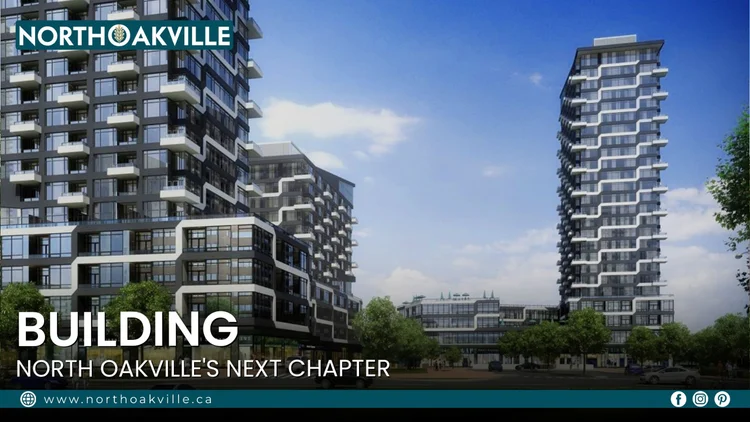
North Oakville is the epicentre of master-planned communities and pre-construction activity in the region, with active development continuing to push north toward Highway 407. If you're specifically house-hunting in this segment, check out the latest pre-construction home listings in North Oakville.
Commuting and Transit: GO Train vs Highway Access
Your daily commute will look very different depending on which end of town you start from.
South Oakville — the rail advantage: Residents here are close to the Oakville GO Station or Bronte GO Station, and express trains during peak periods can noticeably cut the ride to Union Station compared with an all-stops service — though the exact time varies by time of day, so it's worth checking Metrolinx's current schedule for your specific commute window rather than relying on a single fixed number. Driving into Toronto via the QEW/Gardiner is direct, though rush-hour congestion around the Ford Drive area is a common complaint.
North Oakville — the highway advantage: North Oakville sits directly adjacent to Highway 407 and close to Highway 403, making it convenient for drivers heading to other parts of the GTA — Mississauga, Brampton, or Vaughan — without cutting through the town core. The trade-off is rail access: getting to a GO station typically adds a meaningful drive or bus ride south, which can stretch a door-to-door transit commute to Toronto noticeably longer than from the south end. For a deeper look at this specific comparison, see our North Oakville to Toronto commute guide.
Walkability
South Oakville has genuine pockets of walkability — Downtown Oakville and Bronte Village in particular let residents walk to the lake, boutique shops, cafés, and restaurants, though the surrounding residential streets are still fairly car-dependent. North Oakville is built around master-planned "walkable retail" nodes like the Uptown Core at Dundas and Trafalgar, but the overall scale of the area means a car is practically necessary for most day-to-day errands, even with local transit routes connecting residential pockets to the Uptown Core Terminal.
Lifestyle, Amenities, and Dining
South Oakville holds Oakville's waterfront: direct access to Lake Ontario, Oakville Harbour, and Bronte Harbour, with weekends built around walking the water's edge, visiting galleries, or dining at Lakeshore Road bistros. The vibe leans sophisticated, historic, and unhurried.
North Oakville trades the lakefront for interior green space and everyday convenience — the Sixteen Mile Creek trail network, ravines like Lions Valley Park, and large commercial power centres (Walmart, Real Canadian Superstore, Canadian Tire) anchored around the Uptown Core. The dining scene here leans toward a genuinely diverse mix of global cuisine and casual, family-oriented spots rather than white-tablecloth restaurants.
Shopping and nightlife: South Oakville favours independent boutiques, upscale home décor shops, and quiet wine bars or pub-style nightlife. North Oakville centres on big-box convenience and casual dining chains, with nightlife tilted toward sports bars and family-oriented spots rather than a late-night scene.
Schools and Family Infrastructure
Both the Halton District School Board (HDSB) and the Halton Catholic District School Board (HCDSB) operate well-regarded schools across the whole municipality, but the character of each area's school system differs.
South Oakville is home to long-established, historically strong schools — Oakville Trafalgar High School (OTHS) in particular has a reputation as one of the town's most sought-after catchments, and the Oakville Trafalgar High School catchment area is often specifically referenced by buyers targeting South Oakville — with school boundaries here that have generally stayed stable for a long time, giving families a fairly predictable long-term picture.
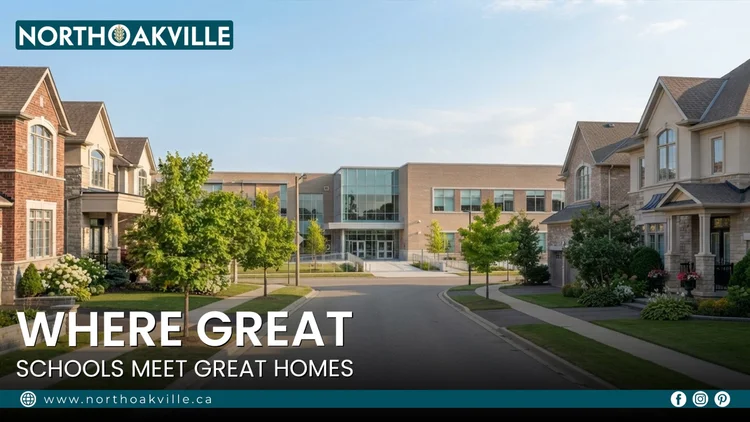
North Oakville has newer facilities built specifically to keep pace with rapid population growth, including schools like Oodenawi Public School and Dr. David R. Williams. High school students in much of North Oakville feed into Iroquois Ridge High School or White Oaks Secondary, which offers an International Baccalaureate (IB) program. Because the area is growing so quickly, school boundaries here are reviewed more frequently than in the south — our best high schools in North Oakville guide covers this in more depth.
Specific school rankings change from year to year and shouldn't be treated as permanent — whichever area you're considering, always verify the current designated school for a specific address directly with the relevant school board rather than relying on a listing description or a school's reputation from a few years ago.
Future Development: What's Coming Next
The two halves of Oakville are governed by different planning frameworks, and that shapes what's coming next in each.
South Oakville has essentially no vacant land left, so its growth is entirely about intensification. The most significant example is the ongoing transformation of the Midtown Oakville area around the Oakville GO Station, where the Town has approved a major mixed-use redevelopment that will bring several new high-rise residential towers and thousands of new homes to the area over the coming years. A separate, provincially-led transit-oriented community proposal for the same general area has also been under active discussion. It remains a subject of ongoing debate between the Town, the Province, and residents — so the final scale of what gets built near Midtown is still evolving. Buyers with a strong interest in that specific corridor should check the Town of Oakville's current planning updates before assuming a particular outcome.
North Oakville continues to expand under the North Oakville Secondary Plans, which are designed to accommodate substantial new population and employment growth through master-planned residential, commercial, and employment areas. Growth areas like the Neyagawa Urban Core and Dundas Urban Core continue to see active planning and construction, alongside new commercial nodes intended to keep daily shopping and services within walking distance of new residential pockets.
Whichever end of town you're drawn to, our guide to new developments in North Oakville is a useful next stop before you commit to a specific street or building.
Who Should Choose South Oakville?
South Oakville tends to suit buyers who want:
A premium, land-scarce real estate asset where long-term value is tied to location rather than newness
A walkable, waterfront lifestyle centred on the lake, marinas, and boutique shopping
Access to long-established, highly regarded school catchments like the Oakville Trafalgar High School area
A quieter, more historic "small-town" feel with mature landscaping
The trade-off: higher entry costs, older-home maintenance considerations, and generally higher property tax bills in absolute dollar terms tied to higher assessed values.
Who Should Choose North Oakville?
North Oakville tends to suit buyers who want:
A newer, more turn-key, energy-efficient home with a comparatively lower entry price point
An "instant community" surrounded by young families, new schools, and modern recreation facilities
Fast, direct access to Highways 407 and 403 for commuting across the wider GTA by car
More housing variety — condos, townhomes, and detached options at different price tiers
The trade-off: smaller lot sizes, less mature landscaping, a heavier day-to-day reliance on a vehicle, and a longer door-to-door commute if your work depends on the GO Train.
If you're weighing specific communities within North Oakville itself rather than North vs South more broadly, our guides to the best neighbourhoods to buy property in North Oakville and best communities for young professionals go deeper on Uptown Core, Glenorchy, and The Preserve Oakville specifically.
Renters and Investors: A Different Calculation
The rental and investment case for each area tends to follow the same underlying logic as the ownership case.
For renters, North Oakville is generally the stronger option because of supply — a much larger stock of modern rental apartments, stacked towns, and condos than South Oakville, where rental inventory is mostly limited to premium condos or occasional basement units.
For investors, the two areas tend to support different strategies. North Oakville favours a cash-flow and yield approach: modern townhomes and mid-rise condos are in steady demand from renters who want low-maintenance, turn-key living, and the purchase-price-to-rent ratio tends to be more favourable here. South Oakville favours a capital-appreciation and infill approach: because land is scarce and finite, investors and builders here are typically less focused on monthly rental yield and more focused on long-term land value, buying older homes to redevelop rather than to rent out.
Neither approach is inherently better — it depends on whether you're optimizing for monthly cash flow or long-term asset appreciation, and how much capital and risk tolerance you're working with.
North Oakville vs South Oakville: Quick Comparison
Factor | South Oakville | North Oakville |
|---|---|---|
Housing age | Mostly 50+ years, mixed with new infill | Mostly under 10–15 years |
Typical lot size | Larger, often irregular | Smaller, standardized |
Housing mix | Detached, luxury low-rise condos | Condos, townhomes, semis, detached |
GO Train access | Strong (Oakville GO, Bronte GO) | Weaker, requires a drive south |
Highway access | QEW-focused | 407 and 403-focused |
Walkability | Strong in Downtown Oakville, Bronte Village | Car-dependent outside retail nodes |
Waterfront access | Direct lake and harbour access | None (inland) |
New development | Infill only, essentially built out | Active greenfield and master-planned growth |
Rental supply | Limited | Abundant |
Best suited for | Established buyers, luxury investors, waterfront lifestyle seekers | First-time buyers, young families, GTA commuters by car |
Final Thoughts
North Oakville and South Oakville aren't really competing versions of the same place — they're two different answers to the question of what "living in Oakville" should look like. South Oakville offers history, waterfront access, and long-established stability, at a premium price and with limited new supply. North Oakville offers newer housing, more accessible price points, and a lifestyle built around modern master-planned convenience, with the trade-off of a longer rail commute and a more car-dependent daily routine.
The right choice isn't about which half of town is objectively better — it's about which trade-offs you're willing to make, and which version of daily life actually fits how you want to spend your mornings, weekends, and commute.
FAQs
What is the actual boundary between North and South Oakville?
The Town of Oakville's planning framework uses Dundas Street as the dividing line between the North Oakville Secondary Plans (Dundas Street to Highway 407) and the Livable Oakville Plan, which covers the rest of the town. Casual usage often draws the line at the QEW instead, so it's worth confirming which plan actually governs a specific property.
Is North Oakville or South Oakville better for a first-time home buyer?
North Oakville is generally the more accessible entry point, with a wider mix of condos and townhomes at a lower comparative cost per square foot. For a full breakdown of the buying process itself, see our first-time home buyer's guide to North Oakville.
Which area has a better commute to downtown Toronto?
South Oakville has the clearer advantage for GO Train commuters, thanks to direct proximity to Oakville GO and Bronte GO. North Oakville is stronger for drivers heading to other parts of the GTA via Highway 407 and 403, but typically involves a longer door-to-door trip for anyone relying on the GO Train.
Is North Oakville a good place to raise a family?
Yes — North Oakville has seen substantial investment in new schools, parks, and recreation facilities to keep pace with its growing population, and many communities here are specifically designed with families in mind. South Oakville can also be an excellent choice for families who prioritize established, long-stable school catchments.
Does South Oakville have better schools than North Oakville?
Both areas are served by well-regarded school boards. South Oakville has long-established schools with stable boundaries and strong historical reputations, including Oakville Trafalgar High School. North Oakville has newer facilities built for its growing population, with boundaries reviewed more frequently due to rapid growth. Always verify the current designated school for a specific address rather than relying on general reputation.
Which area is better for real estate investment?
It depends on your strategy. North Oakville tends to favour investors focused on rental yield and cash flow, thanks to strong renter demand for modern, low-maintenance housing. South Oakville tends to favour investors focused on long-term capital appreciation through land value and infill redevelopment.
Is North Oakville considered part of Oakville proper?
Yes. North Oakville is a formally planned part of the Town of Oakville, governed by the North Oakville Secondary Plans, and is treated the same as the rest of the town for municipal services and taxation.
Which is the best area to live in Oakville overall?
There isn't a single "best" answer — it depends on your budget, commuting needs, and lifestyle priorities. Buyers who value waterfront living, walkability, and established character often prefer South Oakville. Buyers who prioritize newer housing, more space for the price, and highway-based commuting often prefer North Oakville.